
An app-store install is not a product outcome, and a purchase tap is not recurring revenue. Between them sits a chain of app states that can fail because of design, device behavior, network conditions, store outcomes, or subscription consistency.
A useful mobile app conversion funnel connects the complete path:
install or first open → onboarding → activation → paywall exposure→ trial or purchase → validated subscription → entitlement→ first paid value → continuationThe point is not to force every user through one sequence. It is to know which business state failed and open the app sessions that explain it.
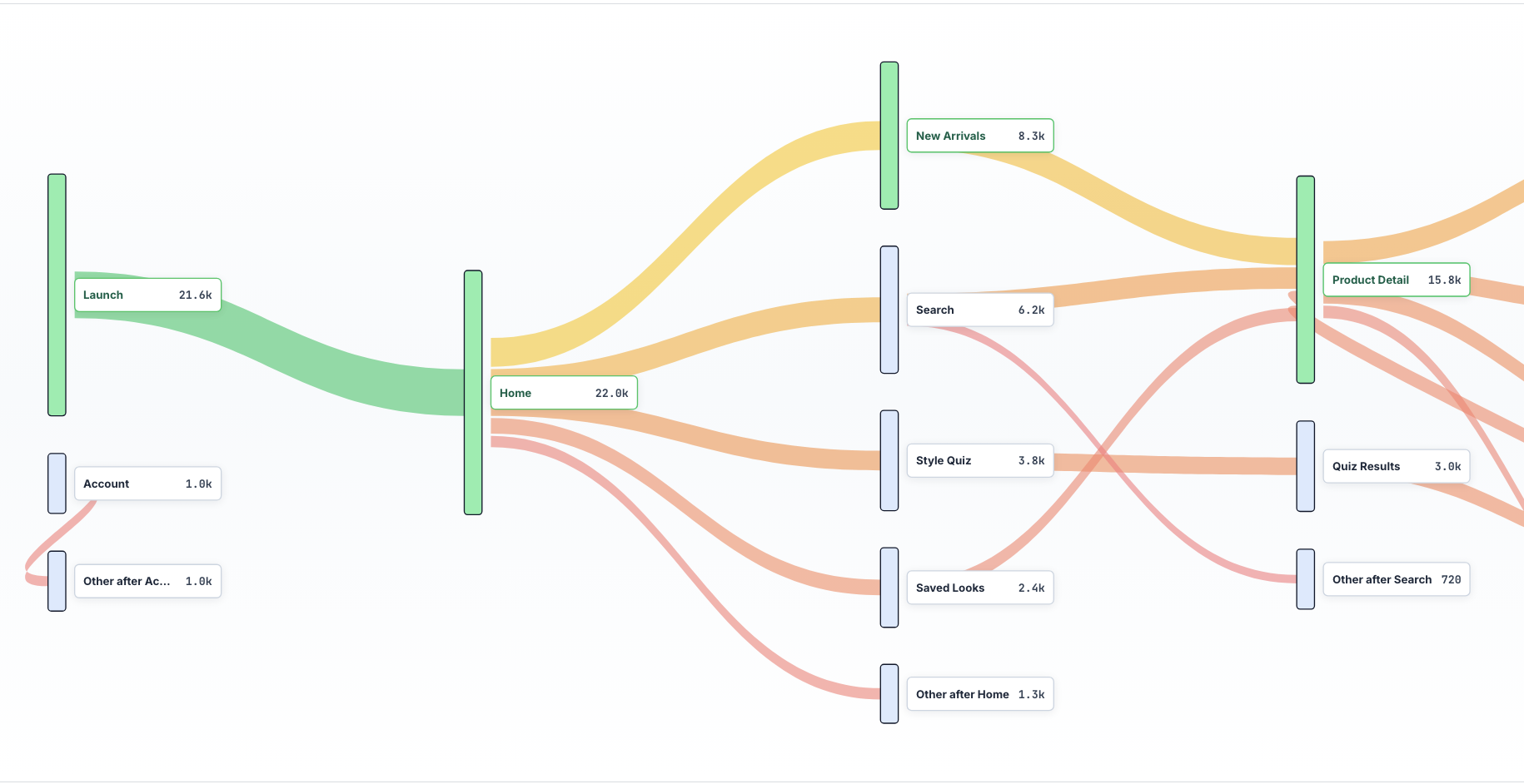
Choose first open or eligible user as the entry
Install data and first-party app behavior may live in different systems. Define the denominator carefully: store installs or attributed installs; first opens; eligible new users; accounts created; and users entering a particular campaign or deep link.
Use first open for product behavior when it is the first verifiable app state. Keep attribution and store metrics joined through approved, privacy-conscious methods rather than pretending all installs become observable users.
Use verified milestones
A mobile funnel should contain states the app and backend can confirm:
- First open
- Required onboarding started
- Core setup verified
- First useful result delivered
- Paywall eligible
- Paywall rendered
- Trial or purchase initiated
- Store transaction validated
- Subscription and entitlement healthy
- First paid capability used
- Appropriate return or renewal
Screen views and taps add diagnostic context. They should not replace outcome states.
Allow alternate paths
Some users see a paywall immediately. Others activate first. Returning users restore purchases. Invited users may skip account setup. A campaign may deep-link directly to a premium feature.
Model these as named branches instead of funnel “drop-off.” Journey analytics can show whether the alternate route reaches the same healthy state or creates more loops and failures.
The best app funnel is not necessarily the shortest. It is the path that delivers clear value and a healthy commercial result with minimal unnecessary effort.
Measure transition quality
For each edge, keep: eligible users and sessions; transition rate; median and tail time; repeated attempts; error, request, crash, and ANR rate; device and version concentration; and successful downstream outcome.
This prevents a fast but unreliable transition from looking healthy. If users complete onboarding but take several retries and fail to return, completion alone overstates quality.
Connect onboarding to monetization
Compare paywall and purchase outcomes by activation state: not activated before exposure; activated immediately before exposure; activated earlier in the same session; activated in a previous session; degraded onboarding with errors or retries; and alternate successful path.
The analysis shows whether monetization timing aligns with demonstrated value. It also keeps a paywall experiment from receiving credit for an onboarding change that altered its audience.
Treat system surfaces as branches
Mobile funnels leave the app for permissions, external authentication, email, settings, and store purchase sheets. Track the handoff and return state.
Questions include: Did the app resume to the intended step? Was pending work preserved? Did the backend complete while the client was suspended? Was the store result reconciled before another attempt? Did denial or cancellation produce a safe next path?
These branches often explain exits attributed to the screen before or after them.
Break down failure by runtime context
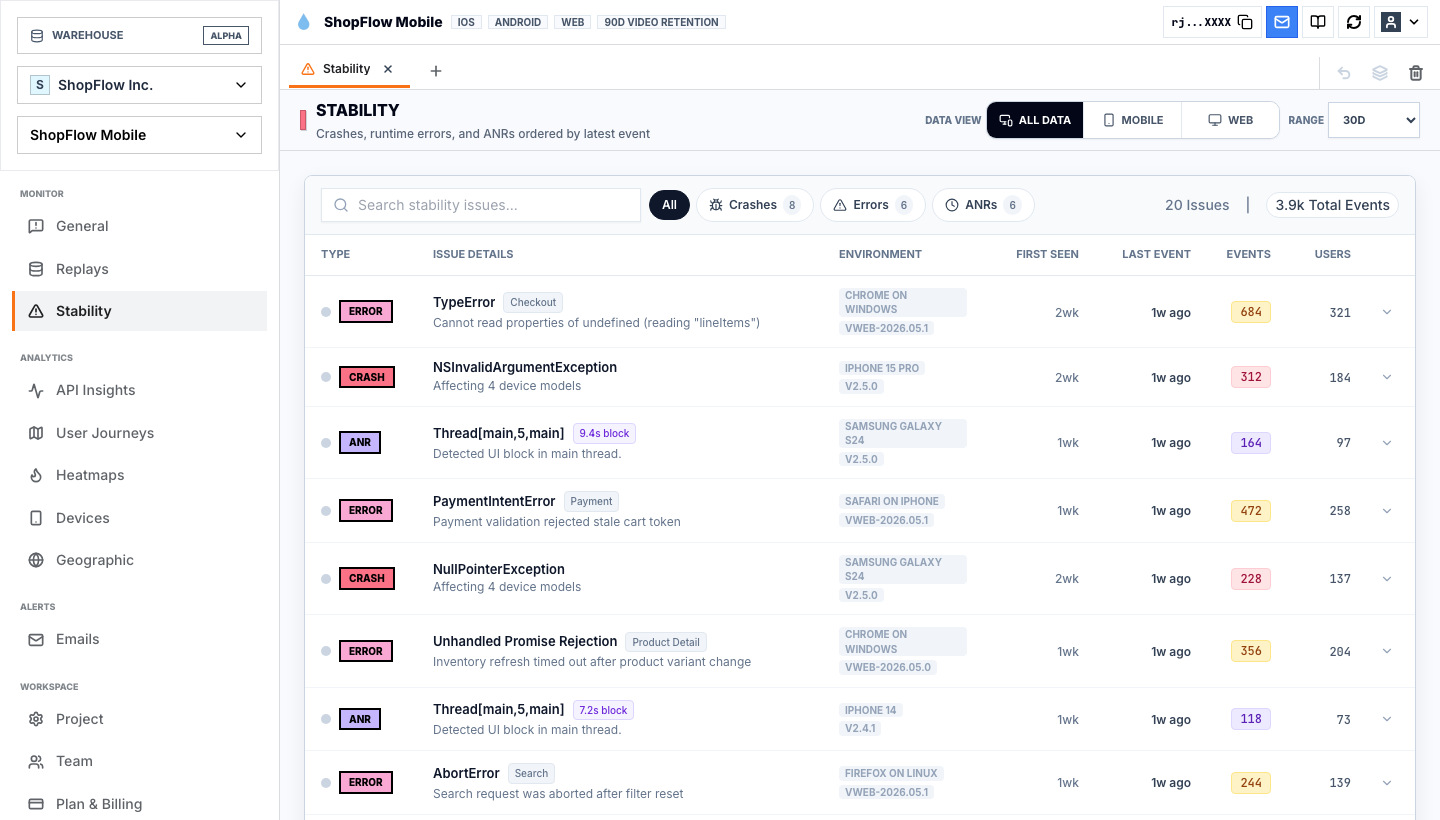
Compare the funnel by app release, platform, OS, device, network condition, and acquisition path. Watch for: onboarding ANRs on lower-memory devices; store product failures in one version; authentication return issues on one platform; paywall layout loss on smaller screens; entitlement refresh failures after backgrounding; and API latency concentrated by region.
Do not redesign every platform to fix a cohort-specific defect.
Open replay from the leaking edge
For the transition with excess loss, select healthy and failed sessions from the same app context. Review touch behavior, navigation, system handoffs, API timing, app lifecycle, errors, crashes, ANRs, and visible feedback.
The replay should remain attached to the funnel query. Random session review cannot establish whether the pattern repeats or whether the session belongs to the affected population.
Reconcile purchase, subscription, and entitlement
The most important commercial states may occur asynchronously. Monitor contradictions: transaction validated without subscription update; subscription active without entitlement; entitlement available while UI remains locked; trial active while paywall remains blocking; and restore successful without content refresh.
These are not ordinary abandonment. They are confirmed failures to deliver the purchased state.
Add retention as the final guardrail
Immediate conversion is not the end of the app funnel. Track first paid value, appropriate return, trial continuation, renewal, refund, and cancellation.
A change that increases early purchases while decreasing product use can reflect poor expectation-setting. A longer onboarding path that raises activation quality may reduce first-session paywall reach and improve durable subscription outcomes.
Review the tradeoff rather than optimizing one step in isolation.
A release review for the app funnel
Before release, save: funnel and branch definitions; activation and entitlement states; target app versions and devices; paywall placements; representative replay queries; and primary metrics and retention guardrails.
After release, compare the same cohorts and open post-release sessions from the transitions that moved. This catches behavioral and runtime regressions before they become a revenue report.
Watch the mobile path behind each drop-off
A mobile funnel in Rejourney opens into the app sessions at any transition. The recording preserves gestures and screen state; device, version, request, crash, and ANR context help explain why one cohort takes a different branch. Successful sessions remain available as the control group.
For the two most common conversion surfaces, continue with mobile onboarding analytics and mobile paywall analytics.