
Self-healing software needs evidence before automation
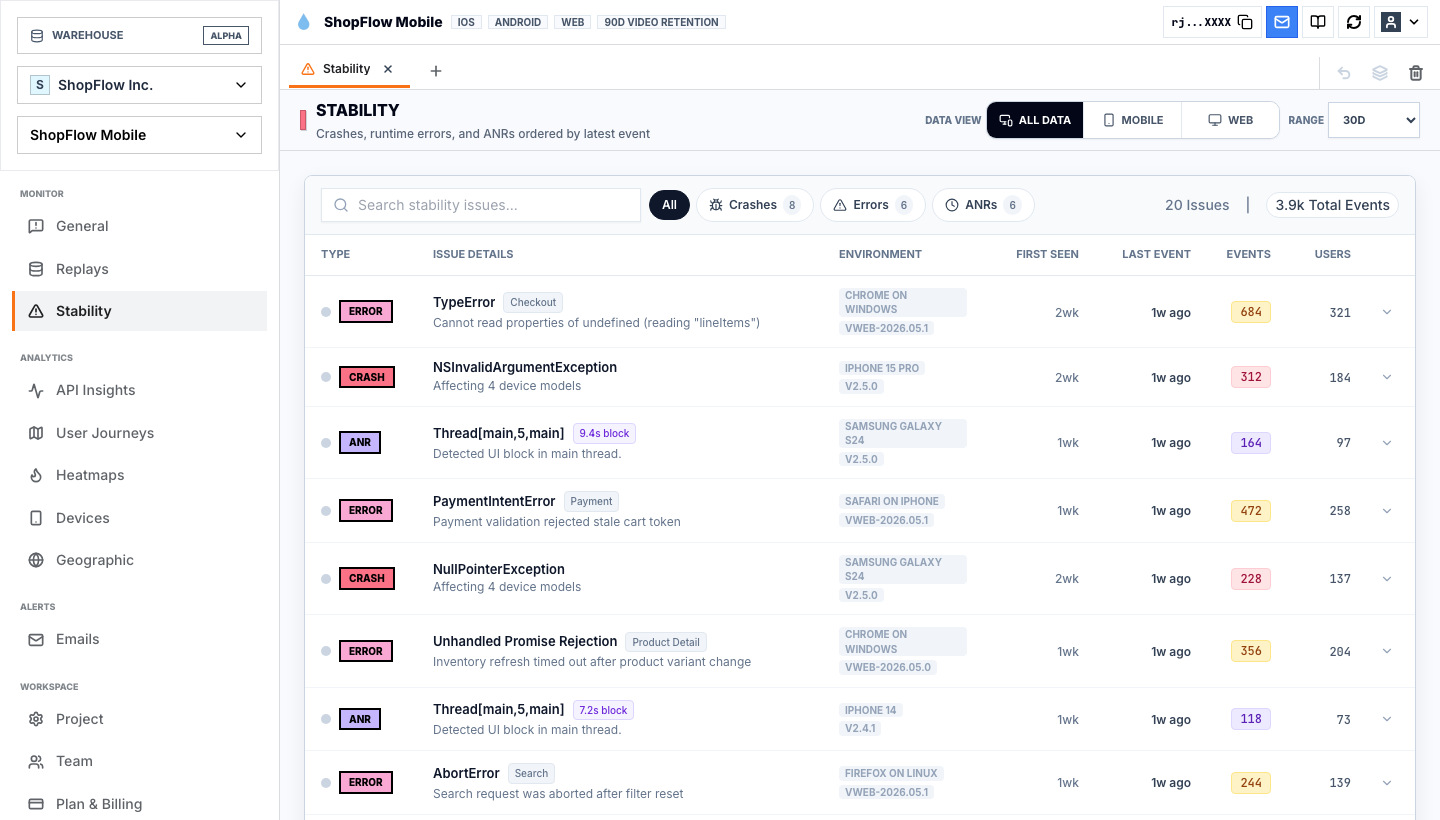
A product cannot heal itself from a vague chart. It needs the exact user path, the failed request, the crash or ANR, the affected device, and the release context that made the issue repeat.
Rejourney keeps those signals tied to real sessions so teams can identify friction, inspect the proof, and hand a bounded problem to an engineer or AI coding workflow.
That makes self-healing less like magic and more like a disciplined loop: observe the user experience, group the repeated issue, package the context, fix, and verify recovery.
Treat self-healing as a repair loop
Self-healing software starts with the same discipline as good debugging: observe the user-facing failure, group repeated signals, attach the session evidence, and make the next step small enough to repair.
Rejourney keeps stability issues, API endpoint failures, device pressure, journeys, and replay evidence close together so teams can move from product friction to a bounded fix packet.
- Group repeated crashes, errors, ANRs, API failures, and leak signals.
- Keep replay and product-path context attached to the issue.
- Hand off enough evidence for an engineer or AI coding workflow to reproduce the problem.
Connect backend and device context before automating
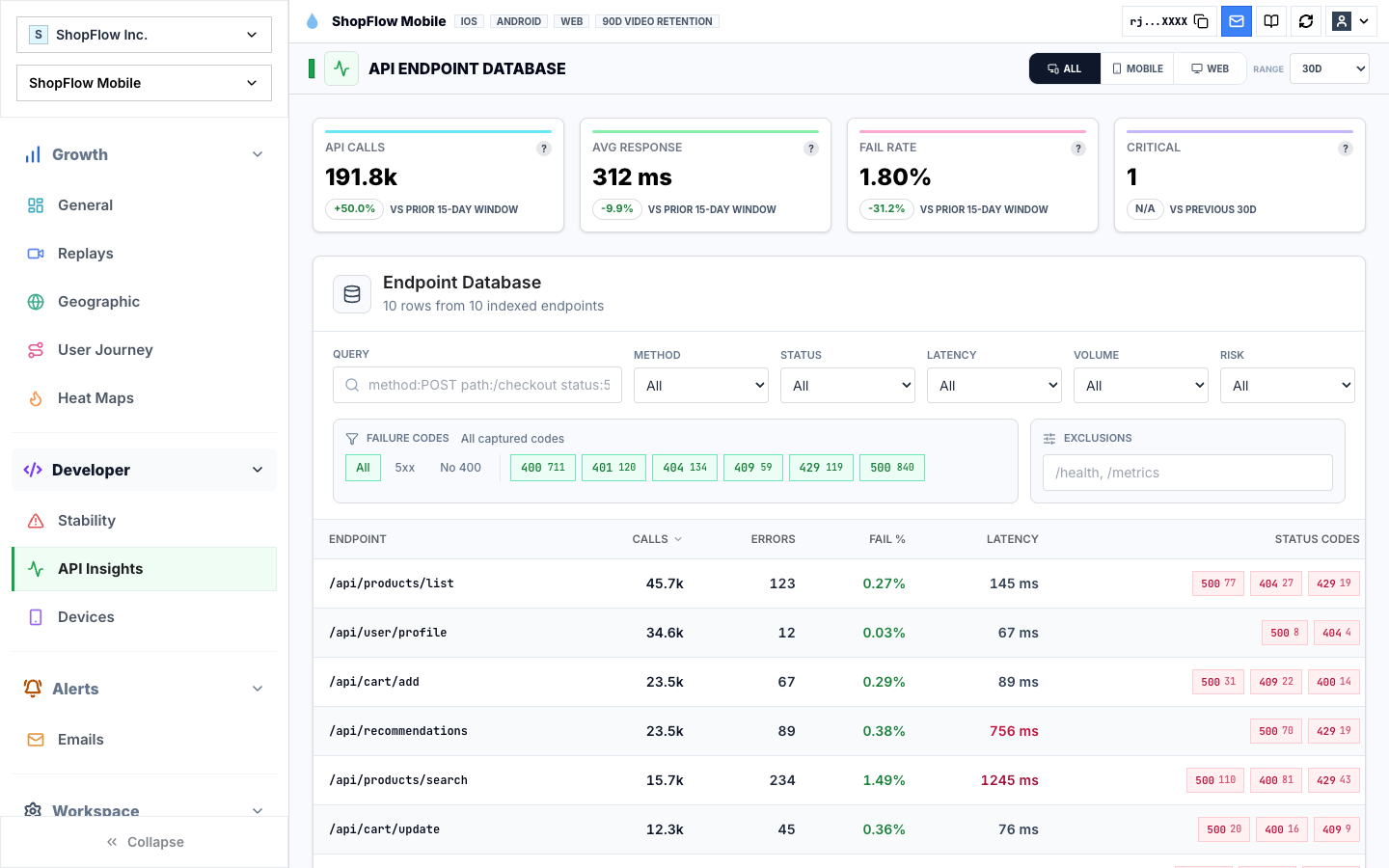
Automation is only useful when the evidence is specific. An endpoint that fails during checkout, a device model that carries ANRs, or a release that changed engagement needs to be visible before the fix can be trusted.
The workflow should preserve the route, screen, request, app version, device, replay link, and expected behavior. That context gives the next reviewer enough information to verify the repair instead of guessing from a summary.
Verify recovery with the same signals
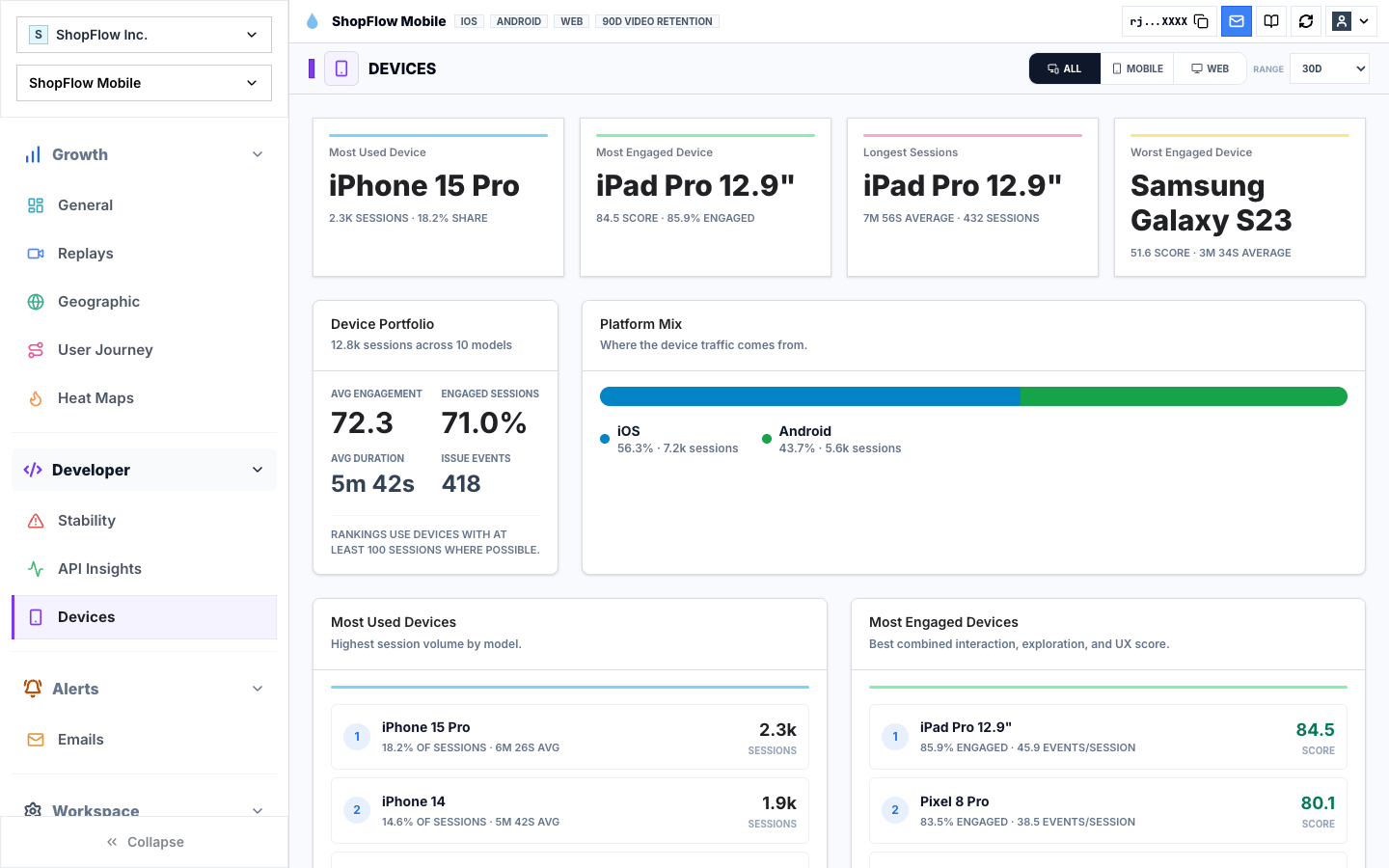
A self-healing loop is incomplete until the team can confirm that the issue actually improved. Use the same session, stability, endpoint, device, and journey views to compare behavior after the fix ships.
If the issue disappears from one view but remains visible in another, the repair may have narrowed the symptom without removing the underlying product friction.
Implementation notes
These are the checks another engineer should be able to use before trusting the feature in production.
- Define which signal types create a repair candidate: crash, ANR, API spike, device hotspot, journey loop, or funnel leak.
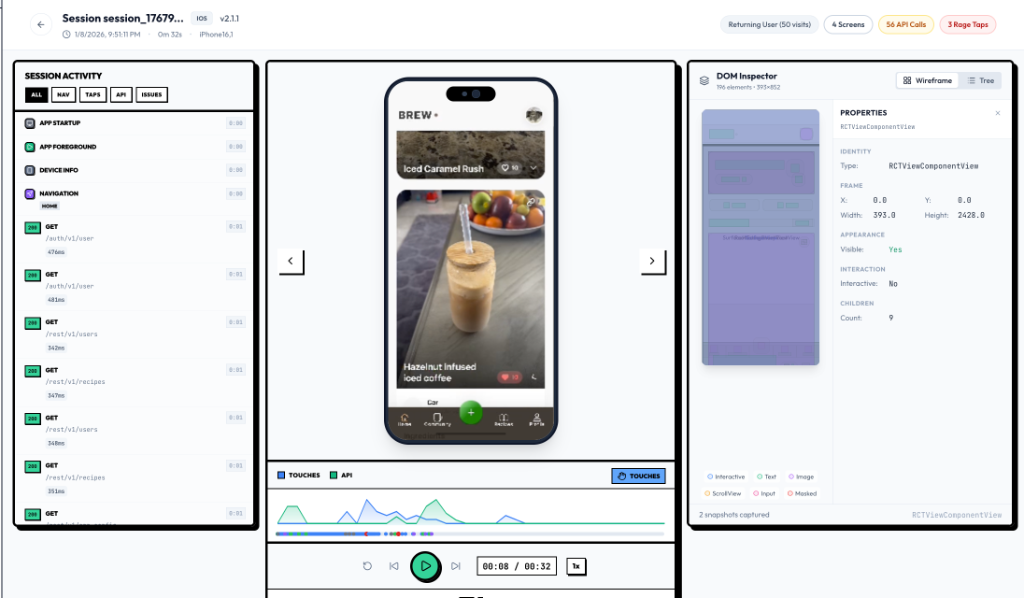
- Require replay or a clear reason replay is unavailable before handing work to an AI coding workflow.
- Attach route, screen, release, endpoint, device, and expected behavior to the fix packet.
- Verify the same signal after release instead of closing the loop from a code change alone.
When to use a lighter signal
- Your team only needs uptime or server-side metrics.
- Production issues are reproducible without user path, replay, device, or request context.
- Your existing tools already package product and engineering evidence into fix-ready workflows.
Questions teams usually ask
What does self-healing software mean for product teams?
It means repeated user-facing friction can be detected, grouped, explained, and handed off with enough context for a fix, instead of waiting for manual reports and incomplete bug tickets.
How does Rejourney support self-healing workflows?
Rejourney connects session replay, journeys, stability issues, API endpoint failures, device cohorts, and AI-ready handoff context around the same real user evidence.
Does Rejourney automatically deploy fixes?
No. Rejourney prepares the evidence and context developers or AI coding tools need. Teams still review, test, and ship fixes through their normal engineering process.
Related reading
- Pricing: See Rejourney's fixed-price plans and included platform limits.
- Live demo: Open the demo dashboard and inspect the replay, heatmap, journey, and stability views.
- React Native SDK: Install mobile session replay for React Native and Expo apps.
- Web SDK: Add browser session replay, analytics, and network capture to a web app.