Rejourney Marlin for GitHub
Fix the leaks your replays expose.
Marlin is the Rejourney GitHub App that uses replay context to identify funnel and revenue issues, then suggests code fixes your team can review from the repository.

checkout/PaymentSheet.tsx
+ retry failed intent before empty state
+ guard CTA when plan quote is stale
Issue detection
The fix starts from the recorded user sessions by Rejourney.
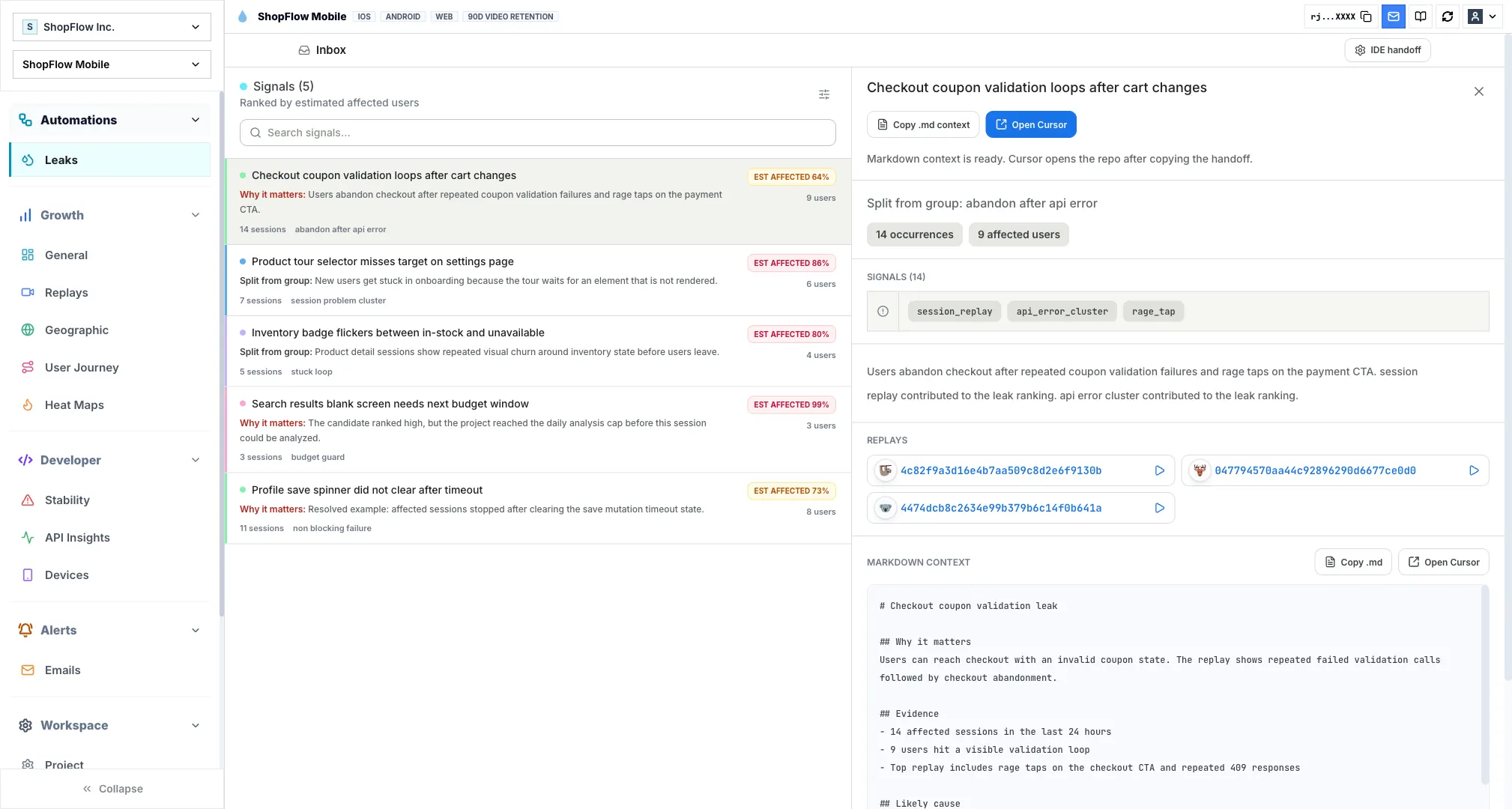
Rejourney groups repeated checkout failures, rage taps, broken onboarding paths, and abandoned funnels into signals. Marlin reads the same evidence your team sees: affected users, session count, failure cluster, and why the leak matters.
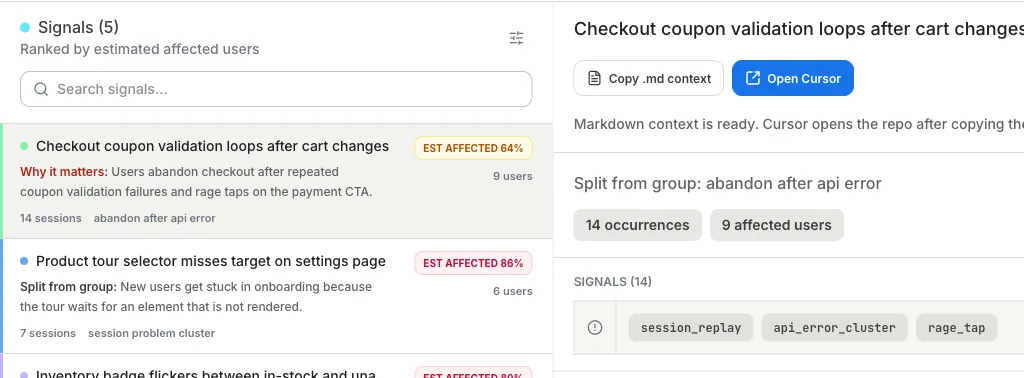
Replay context
Then it creates a ranked "leaks" cause and fix feed.
The repair note is grounded in the replay timeline: user actions, console events, network failures, DOM state, and the specific sessions that prove the leak is real.
Revenue priority
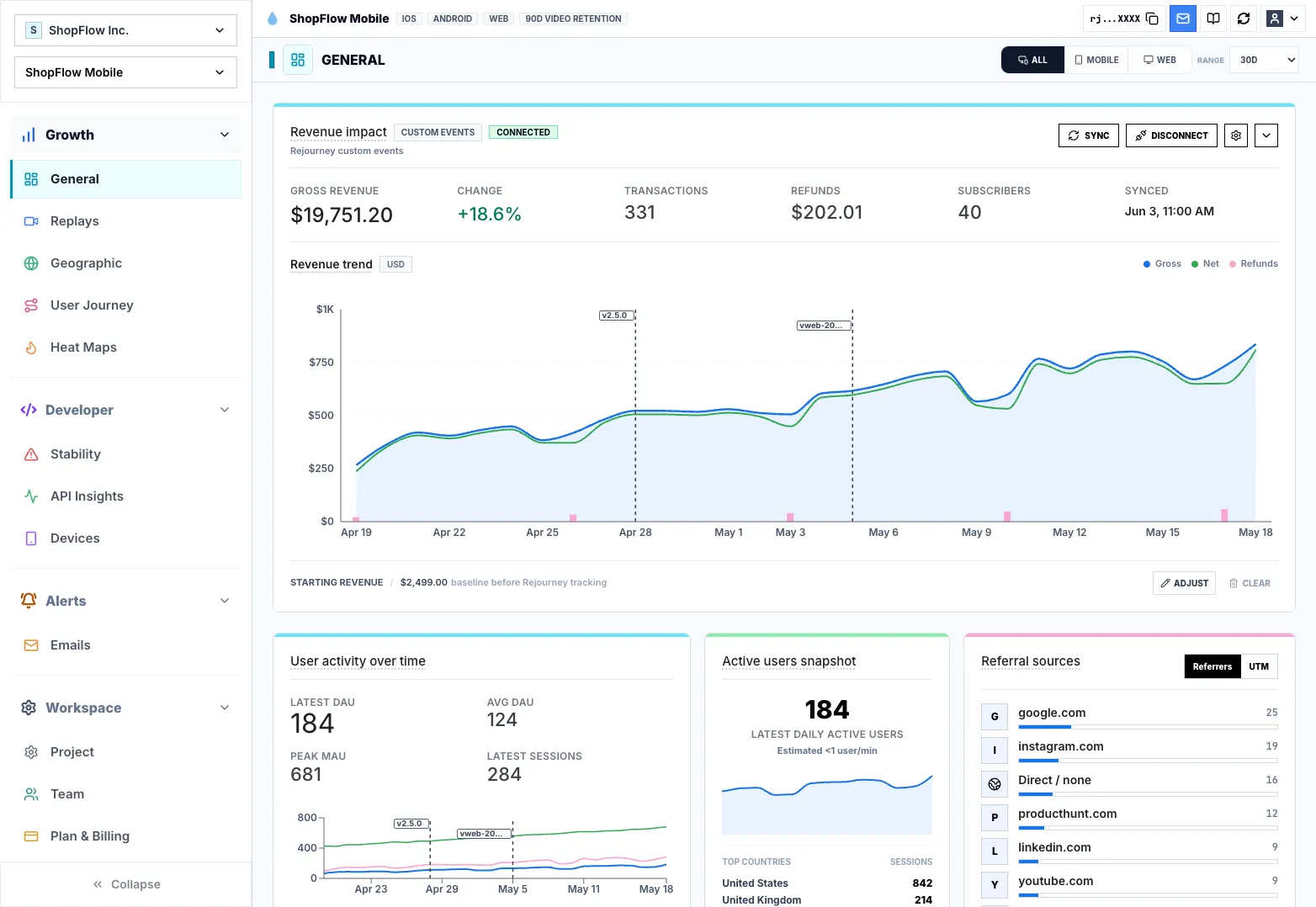
The issue is ranked by business impact.
Marlin can tell the difference between cosmetic noise and a checkout path that blocks revenue. Revenue movement, affected cohorts, and release timing travel into the GitHub suggestion so engineers know why the fix should move now.
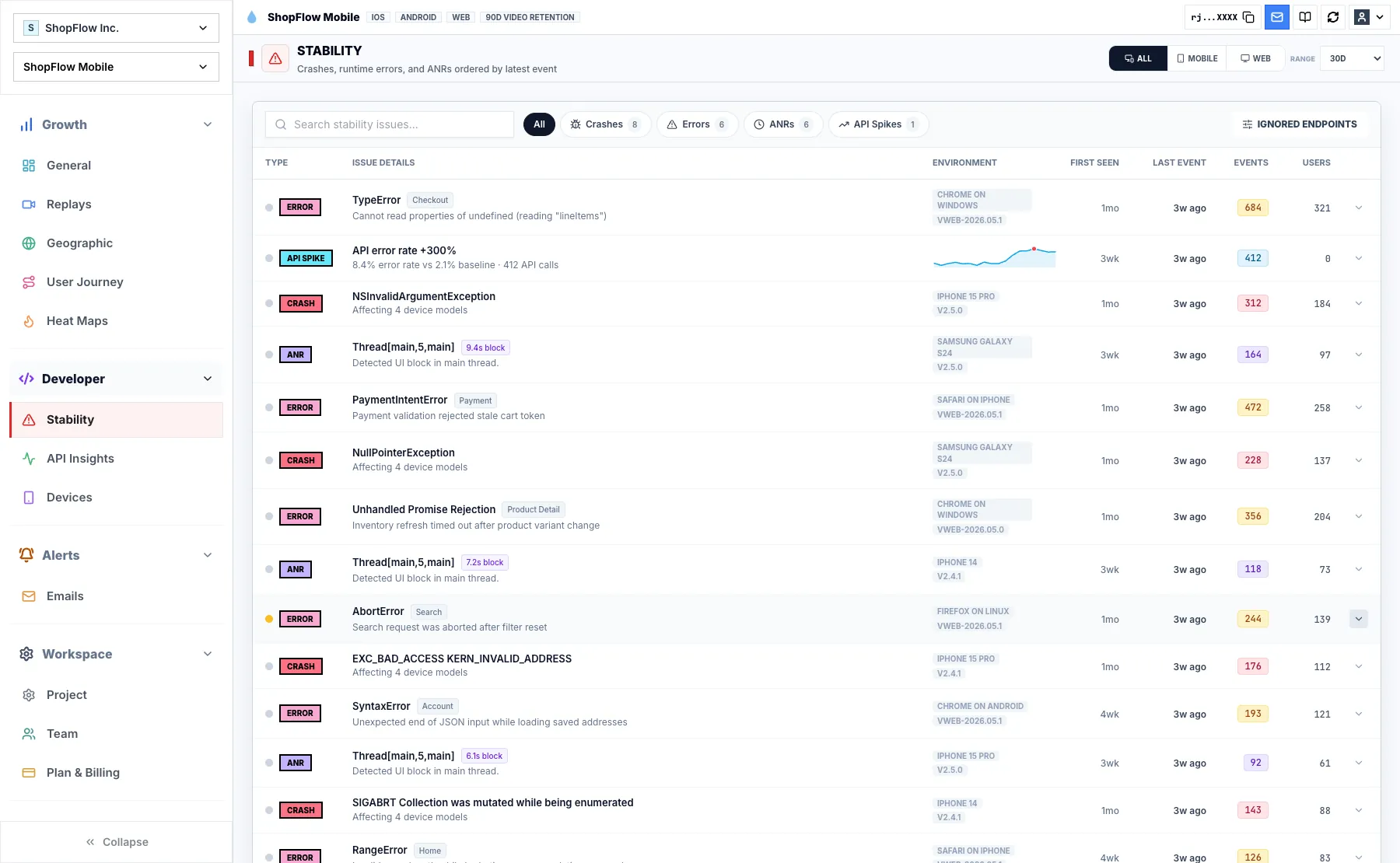
Stability evidence
Crashes, ANRs, and API spikes become fix paths too.
When the leak is technical, Marlin uses the same issue feed to connect stack traces, device cohorts, endpoint spikes, and replay context to likely files. The result is a focused repair brief instead of a vague stability ticket.