
API endpoint insightsAPI insightsWeb apps, Mobile apps, Backend teams

API endpoint insights tied to product sessions

Track endpoint volume, latency, failure codes, and risk while keeping the affected session evidence close.

Rejourney API endpoint insights dashboard with endpoint risk latency and failure codes
Turn API telemetry into product evidenceEndpoint insights show which backend behavior became user-visible friction in captured sessions.

API failures become product problems when users feel them

Endpoint health is not only an infrastructure metric. A slow checkout request, failed profile load, or repeated 500 during onboarding can become product friction even when the rest of the system looks healthy.
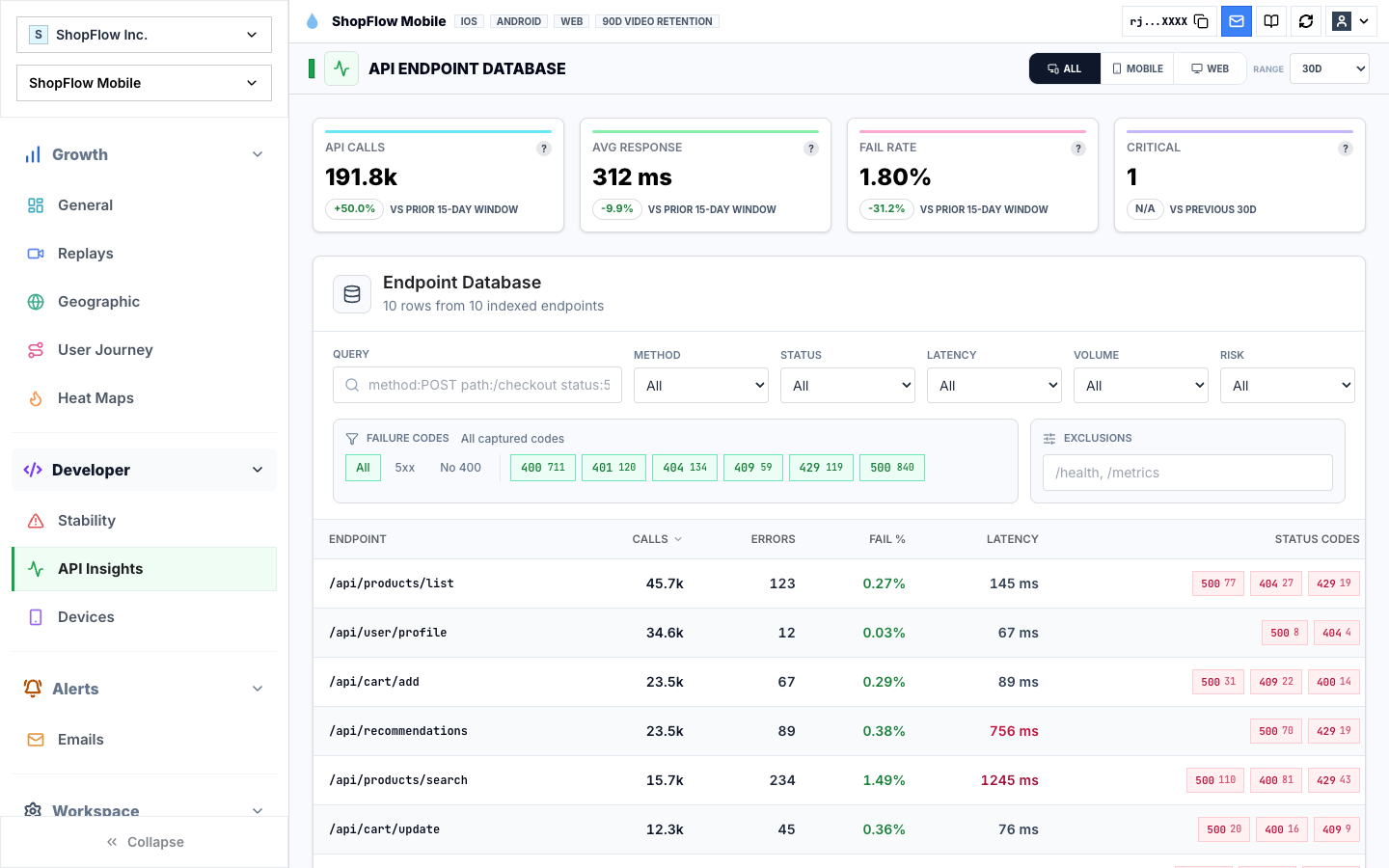
Rejourney's API endpoint insights show calls, latency, failure rates, status codes, and risk across captured sessions so product and engineering can identify which backend problems users actually experienced.
That keeps API monitoring close to replay, journeys, stability, device context, and release impact instead of making teams translate raw logs into product consequences by hand.
Track the endpoint behavior users actually felt

API endpoint analytics is most useful when it explains product impact. A high-volume endpoint, a slow endpoint, and an endpoint with a small but repeated 500 rate can each matter differently depending on where users encounter it.

Rejourney's endpoint database keeps calls, errors, fail rate, latency, status codes, filters, and risk together so teams can find the backend behavior most likely to explain user friction.

  • Sort endpoints by volume, errors, fail rate, latency, and risk.
  • Filter by method, status family, failure code, latency, volume, and endpoint path.
  • Use endpoint insights beside replay, stability, journeys, and device context.
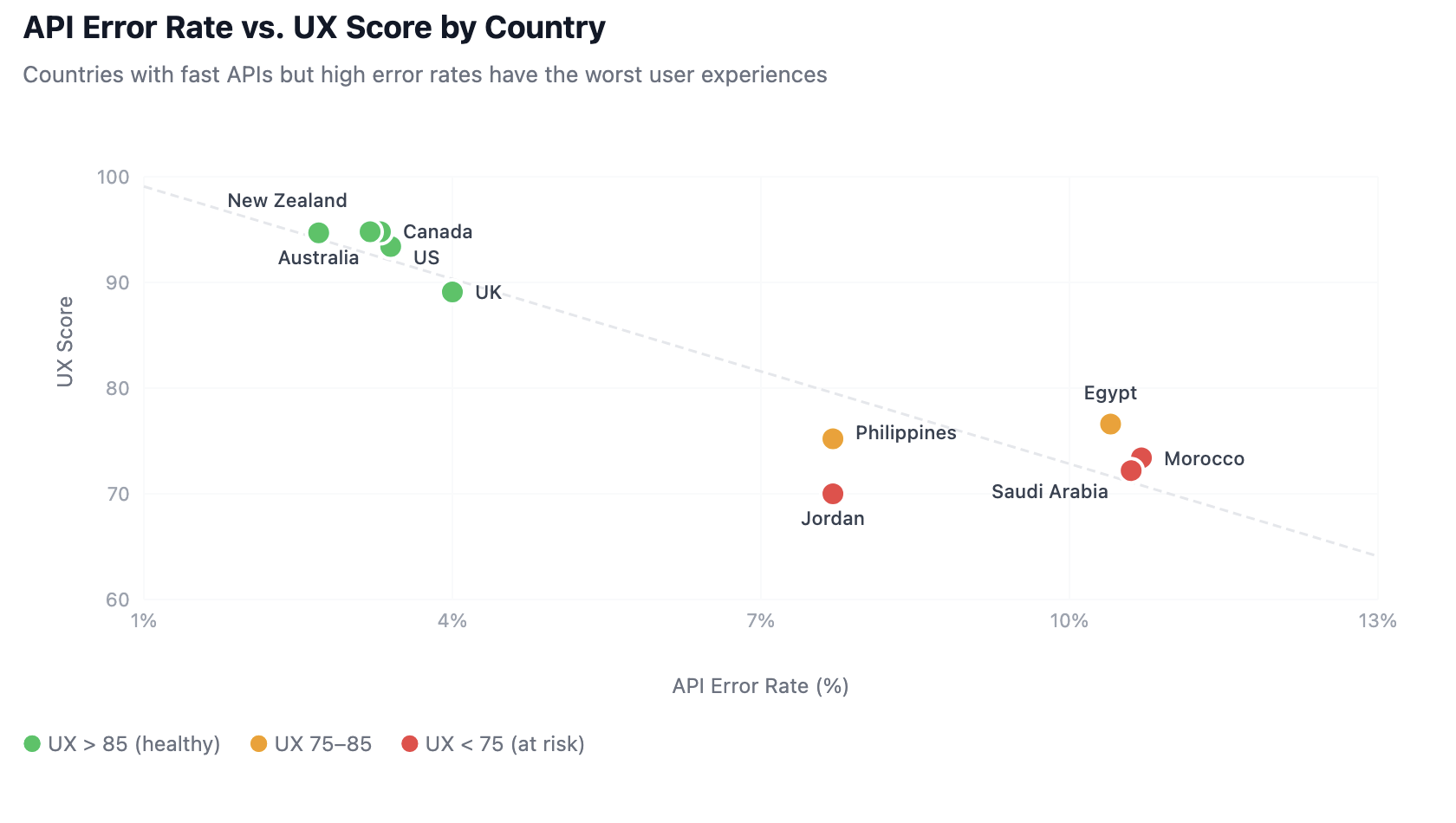
Rejourney API error analytics by country
API error impactUse regional and product context to understand where API errors shape user behavior.

Do not stop at the status code

A 500 during checkout and a 500 on a background refresh do not carry the same product cost. Endpoint insights should show enough context to separate noisy failures from failures that block intent.

Use status codes, latency, request volume, and risk as the starting point, then inspect the affected sessions and journeys before turning the endpoint into engineering work.

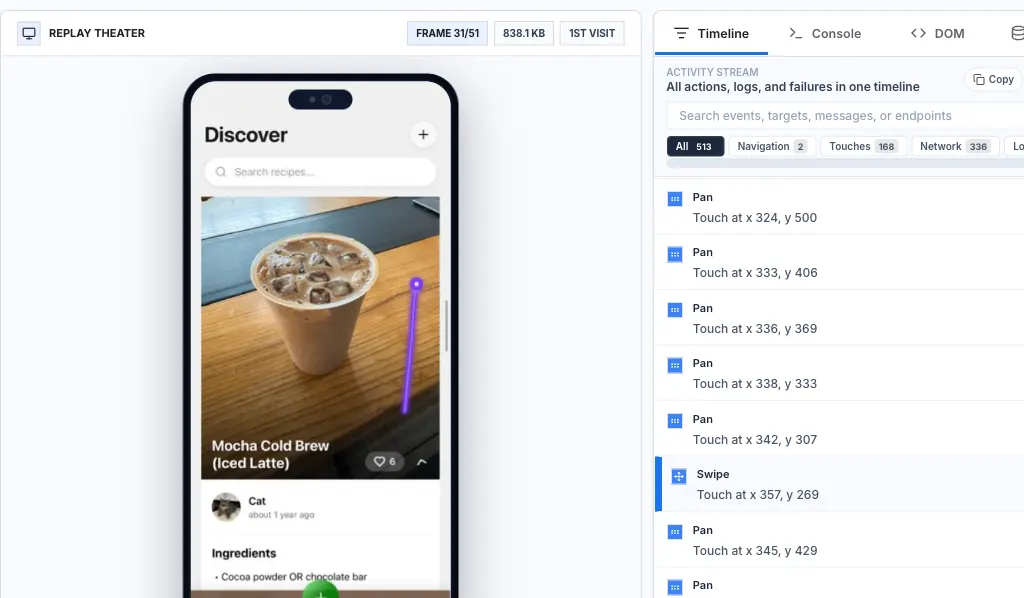
Rejourney replay evidence for API failure sessions
Replay evidenceOpen sessions where endpoint behavior changed the user experience.

Connect API failures to funnel and retention work

API issues often look like product confusion to users: a button that appears ignored, a stale feed, a form with no confirmation, or a checkout step that silently fails.

When endpoint insights sit beside session replay, teams can explain not just which endpoint failed, but how the failure changed the user's path.

Rejourney heatmap analytics view
HeatmapsSee where attention and friction cluster across screens.

Implementation notes

These are the checks another engineer should be able to use before trusting the feature in production.

  • Capture endpoint path, method, status code, latency, route or screen, release, and sanitized request context.
  • Avoid capturing sensitive request bodies or tokens in endpoint context.
  • Filter out health checks and low-signal endpoints before ranking product risk.
  • Attach one or more affected sessions when turning an endpoint issue into a ticket.

When to use a lighter signal

  • Your API questions are only about uptime and server health.
  • You do not need to connect endpoint errors to users, sessions, funnels, or releases.
  • Your observability stack already shows which product experiences each endpoint affected.

Questions teams usually ask

What are API endpoint insights?

They are per-endpoint views of request volume, latency, failure rate, status codes, and risk, tied back to product sessions where users experienced the API behavior.

How is this different from backend monitoring?

Backend monitoring shows system health. Rejourney focuses on the product impact by connecting endpoint behavior to sessions, journeys, devices, and replay evidence.

Can Rejourney help find API-driven funnel leaks?

Yes. When users drop after slow or failed requests, API endpoint insights can help teams connect the technical failure to the affected session and product path.

Related reading

  • Pricing: See Rejourney's fixed-price plans and included platform limits.
  • Live demo: Open the demo dashboard and inspect the replay, heatmap, journey, and stability views.
  • React Native SDK: Install mobile session replay for React Native and Expo apps.
  • Web SDK: Add browser session replay, analytics, and network capture to a web app.