How Rejourney Works
From lightweight session recordings to AI-assisted code repairs, see the full pipeline that helps heal conversion leaks.
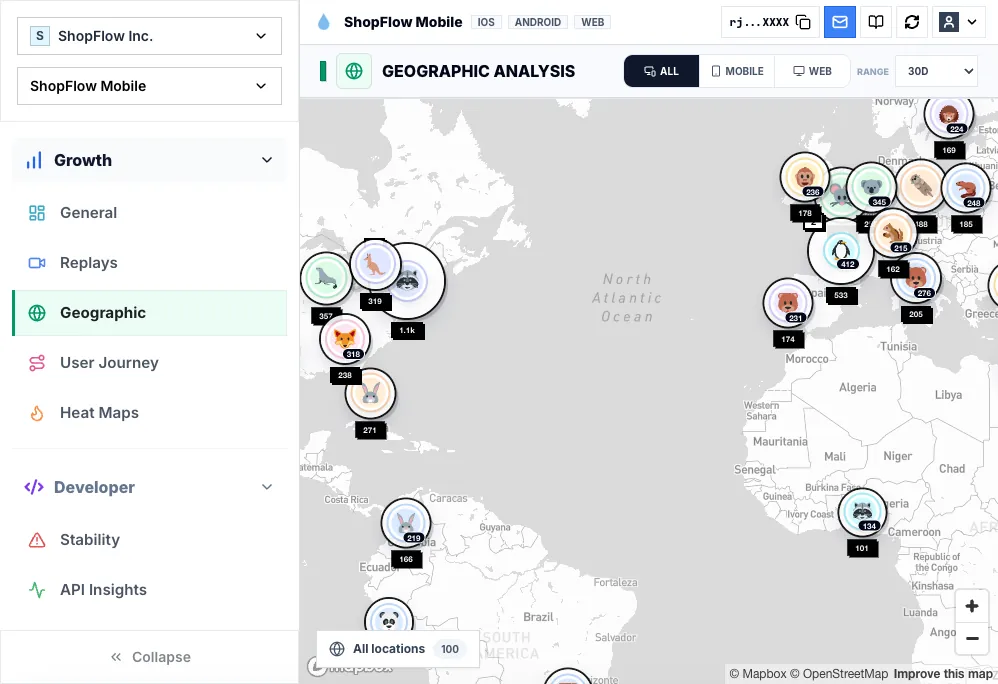
Replay context
First, Rejourney records the user sessions.
The user's session and journey is recorded as a video with collected metadata.
Issue detection
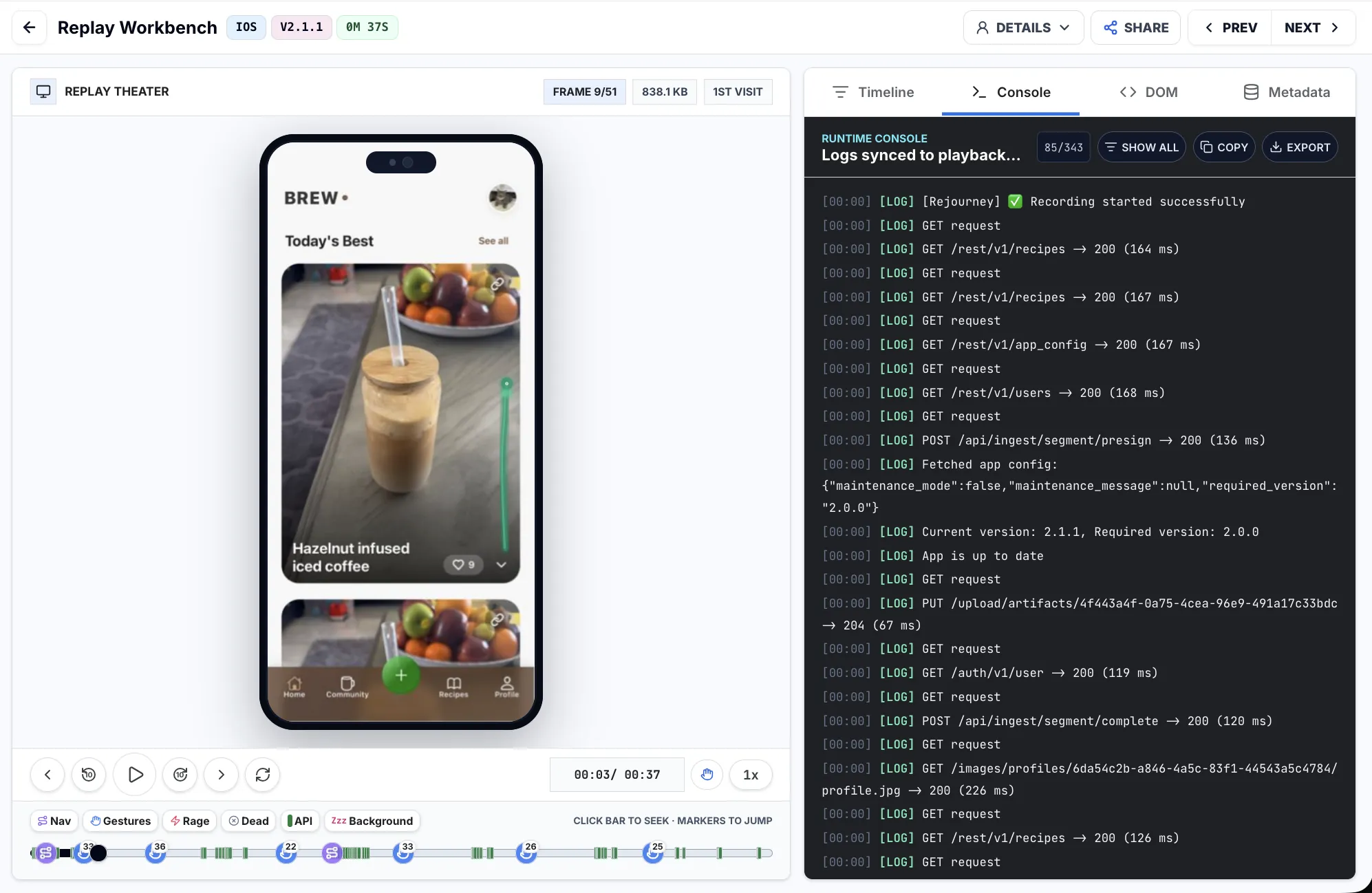
Then, Rejourney creates the ranked "leaks" feed.
Rejourney groups repeated checkout failures, rage taps, broken onboarding paths, and abandoned funnels into signals. Marlin reads the same evidence your team sees: affected users, session count, failure cluster, and why the leak matters.
Revenue priority
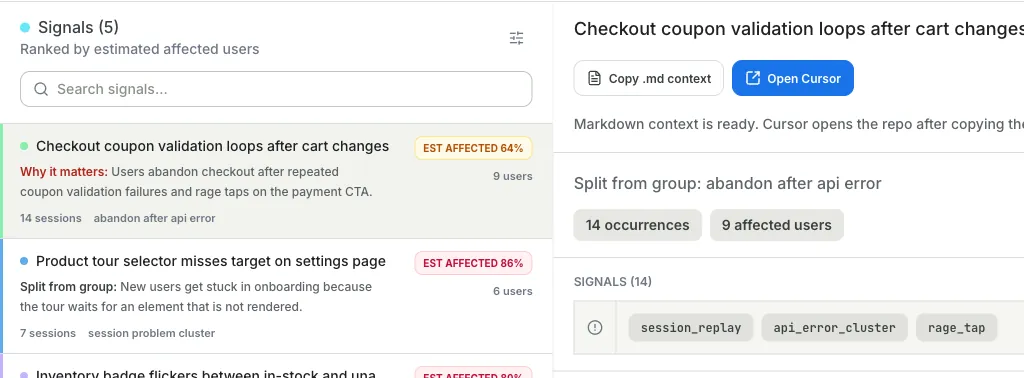
The issues are ranked by business impact.
Marlin can tell the difference between cosmetic noise and a checkout path that blocks revenue. Revenue movement, affected cohorts, and release timing travel into the GitHub suggestion so engineers know why the fix should move now.
Stability evidence
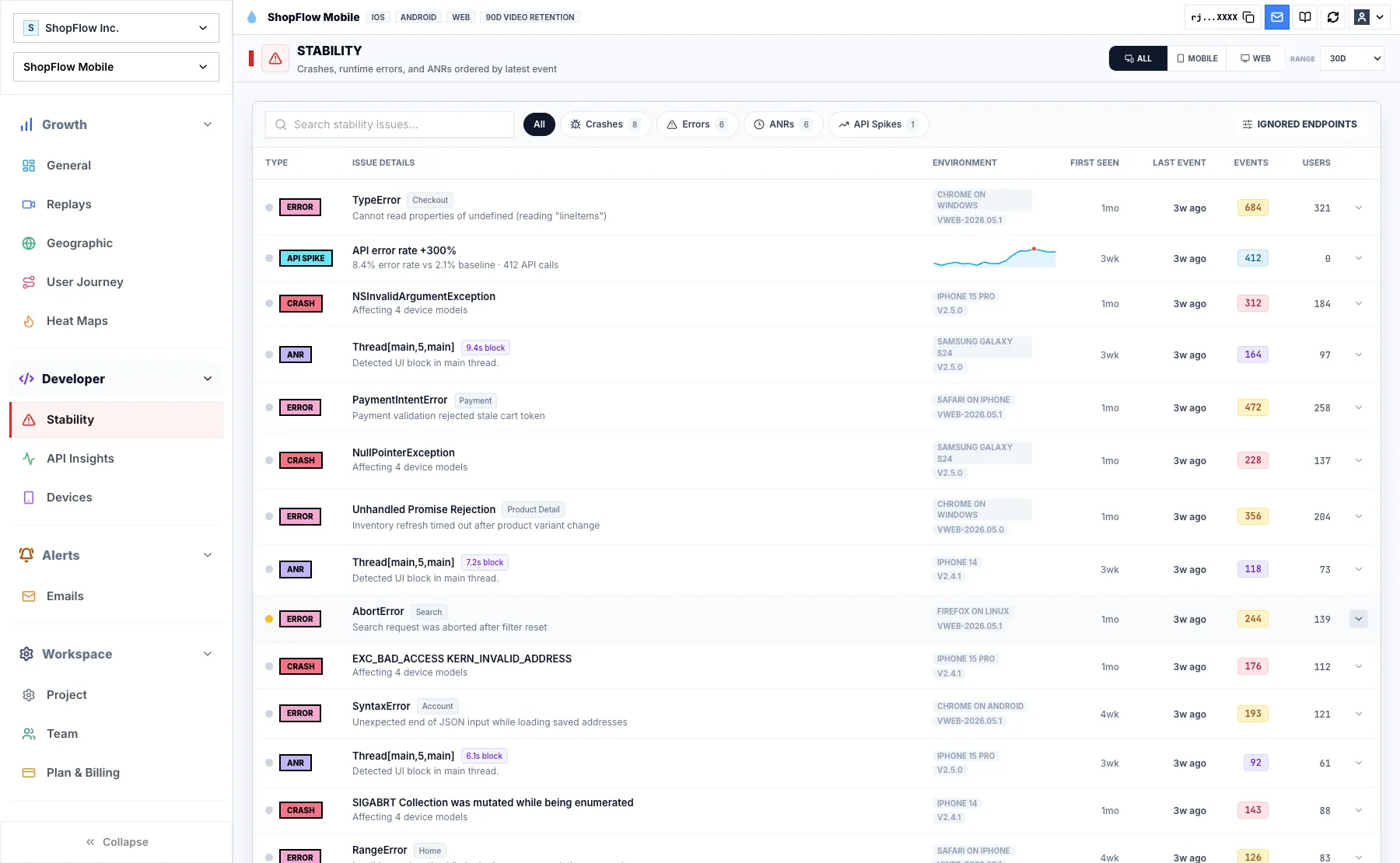
Crashes, ANRs, and API spikes become fix paths too.
When the leak is technical, Marlin uses the same issue feed to connect stack traces, device cohorts, endpoint spikes, and replay context to likely files. The result is a focused repair brief instead of a vague stability ticket.
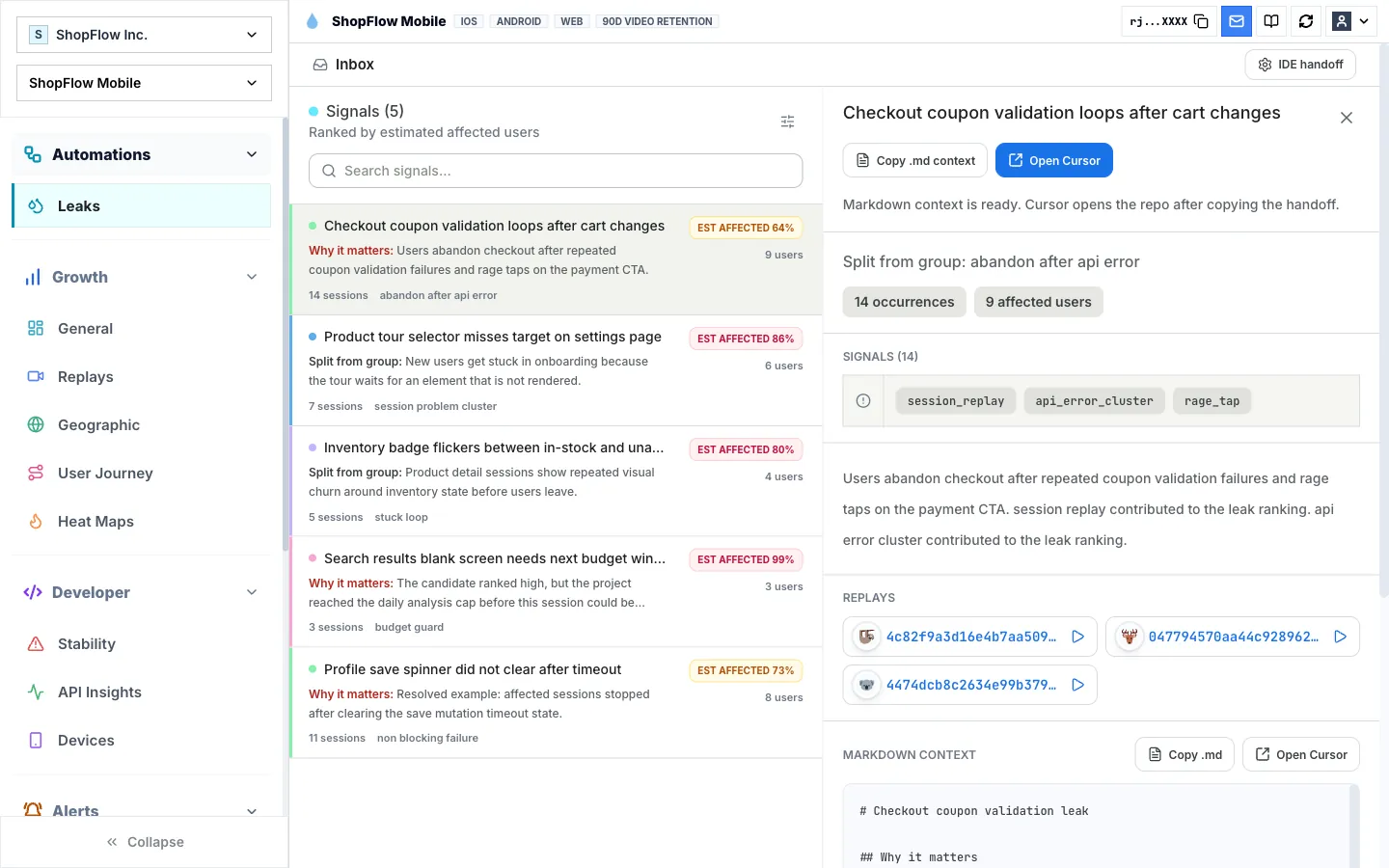
IDE Handoff
Generate a copyable .MD context file for your coding agent.
Once the issue is analyzed, Marlin packs the entire diagnostic context—replay events, affected user sessions, and console stack traces—into an LLM-optimized Markdown payload. Copy it straight to your clipboard to paste into Cursor, Claude, or Copilot for an instant, precise code fix.
Growth impact
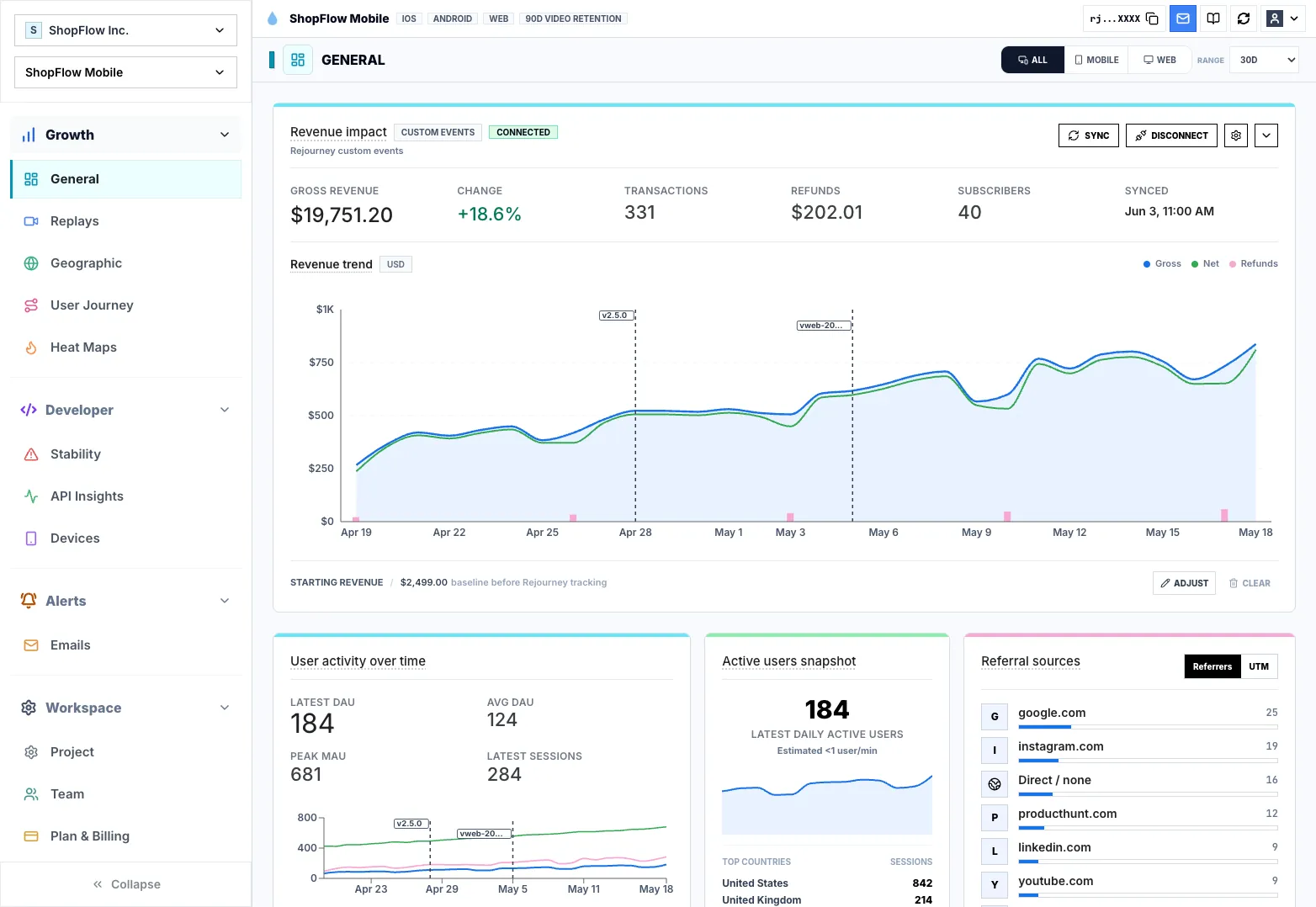
Watch the conversion and growth impact.
Track conversion recovery, regional cohorts, and revenue movement in real time. Verify that released fixes actually restored conversions and healed the leak.