
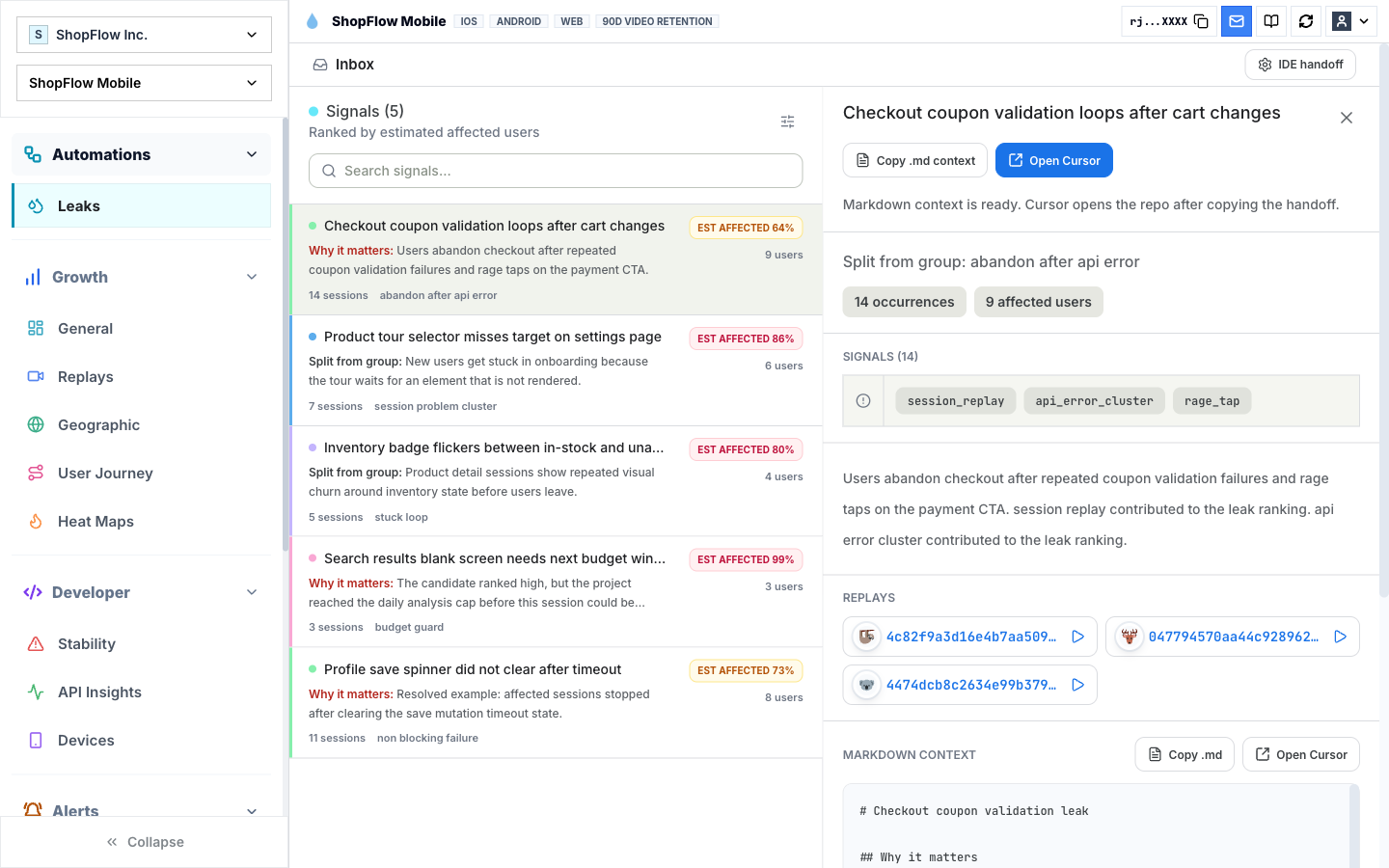
AI agents need evidence, not a vague bug summary
A coding agent can only help if it receives the right facts: the path, expected behavior, observed behavior, affected release, failed request, event sequence, and replay evidence that proves the issue.
Rejourney turns session evidence into structured context that a developer can review and hand to an AI workflow without rewriting the same bug report from scratch.
The goal is not to replace engineering judgment. It is to remove the tedious translation between what happened in a real session and what a coding agent needs to start a fix.
Start from the question the team needs to answer
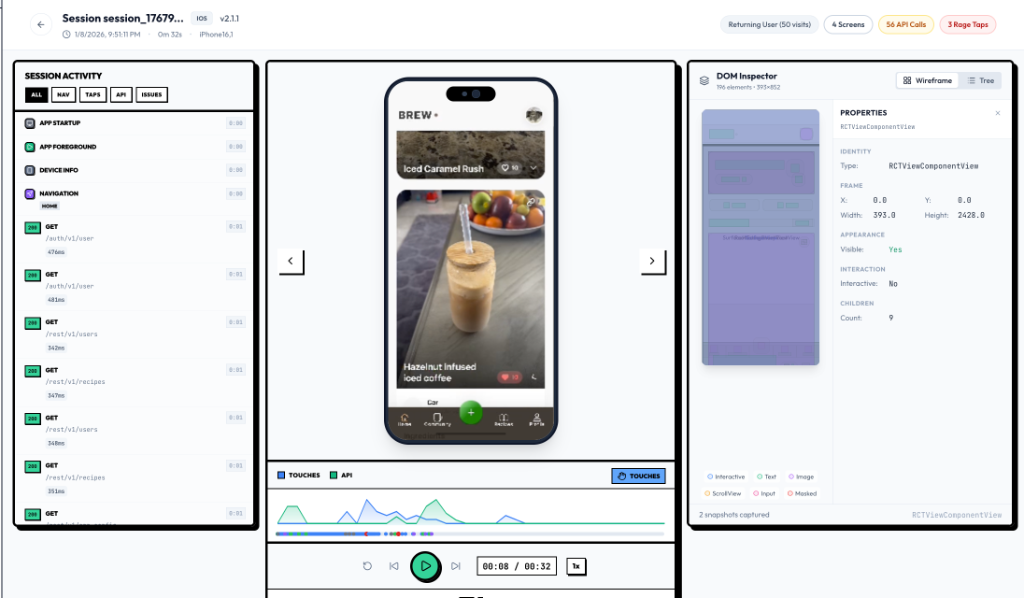
Replay is most useful when it is tied to a specific product or support question: why a flow dropped, why a user got stuck, why a release created tickets, or why a screen behaved differently in production than it did in QA.
For developers, the implementation goal is to make that session searchable and explainable later. Capture the route or screen, release version, platform, product events, and the technical signals that explain what happened around the visual session.
- Route or screen name
- SDK and app version
- Key product events
- Failed requests, console logs, crashes, or ANRs
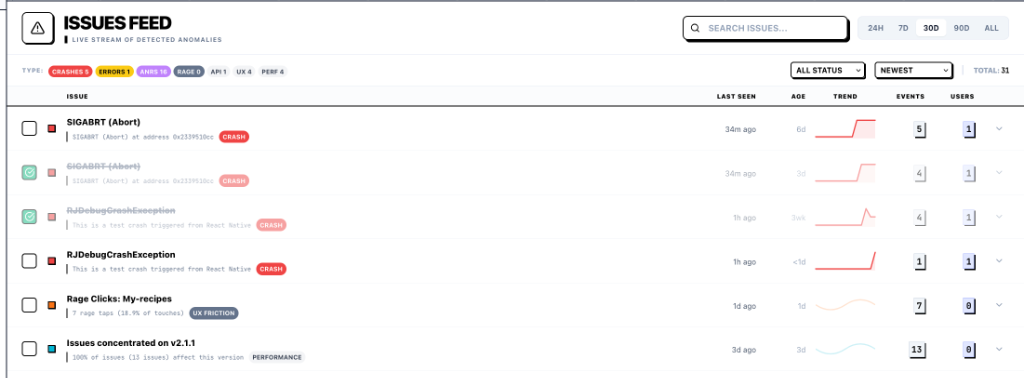
Use the replay to find the pattern behind the clip
A single recording can show the first clue, but it should not become the whole argument. After watching the session, filter for similar routes, devices, versions, failed requests, or journeys to see whether the behavior repeats.
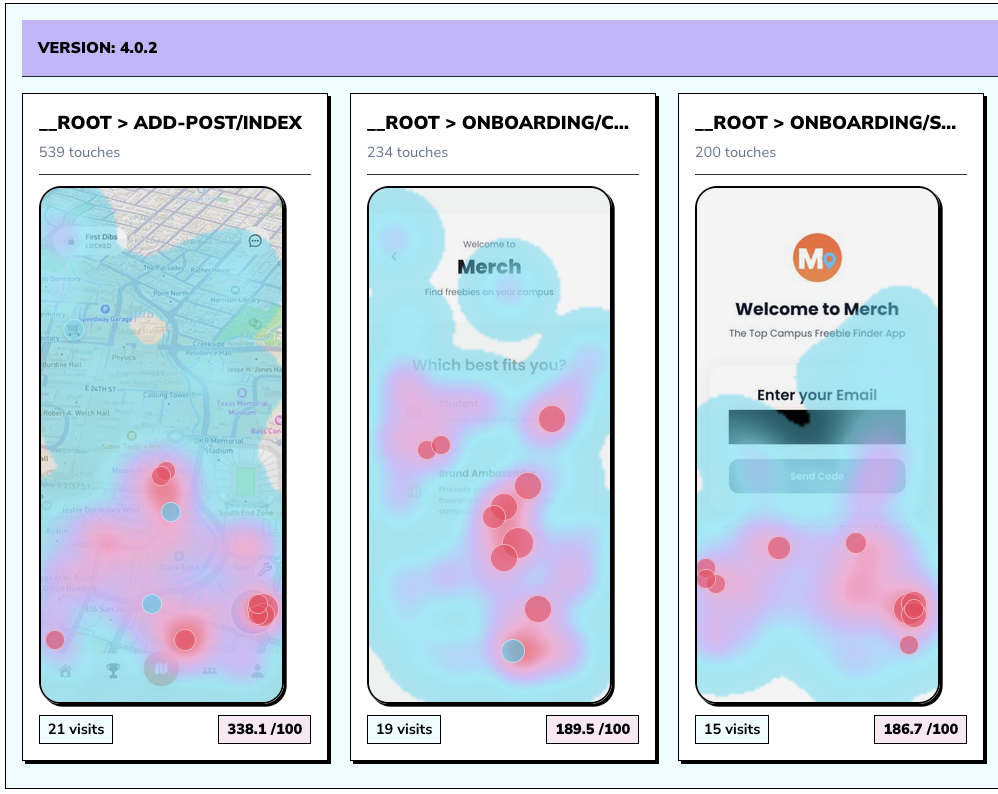
The productive loop is to move between the individual session and the aggregate views. Replay explains the moment; journeys, heatmaps, events, and stability views show whether that moment deserves engineering time.
Keep capture boring, private, and reliable
Treat replay instrumentation like production telemetry. Mask sensitive fields by default, verify the SDK does not capture private content, and roll the integration out first on a flow where the team can quickly validate data quality.
Once the basics are trustworthy, expand coverage intentionally. Good replay data is consistent enough that a ticket, release review, or bug report can point to a session and everyone can inspect the same facts.
Implementation notes
These are the checks another engineer should be able to use before trusting the feature in production.
- Name routes, screens, and important states clearly enough that another engineer can search for them later.
- Attach release, app version, browser, OS, and device context before relying on replay for triage.
- Mask private UI by default, then explicitly allow only the surfaces the team needs.
- Verify one successful and one failed session for the target flow before calling the integration ready.
When to use a lighter signal
- Your team does not use coding agents or IDE assistant workflows.
- Issues are rare enough that manual reproduction notes are easy to maintain.
- Your bug tracker already includes replay, event, request, and release context automatically.
Questions teams usually ask
What goes into an AI agent handoff?
The useful packet includes replay links, route or screen path, expected behavior, observed behavior, product events, release and device context, failed requests, crashes, and likely reproduction steps.
Does Rejourney automatically write code?
Rejourney focuses on preparing evidence and context. Developers can then use that context with their preferred AI coding tools and review the result.
Why not just paste a replay link?
A replay link is useful, but agents and developers also need structured facts: what failed, where, for whom, and which signals support the diagnosis.
Related reading
- Pricing: See Rejourney's fixed-price plans and included platform limits.
- Live demo: Open the demo dashboard and inspect the replay, heatmap, journey, and stability views.
- React Native SDK: Install mobile session replay for React Native and Expo apps.
- Web SDK: Add browser session replay, analytics, and network capture to a web app.