
Revenue leakage is the gap between the revenue a business could reasonably capture under a healthy process and the revenue it actually captures. In SaaS, that gap can begin long before invoicing.
A qualified user fails to activate. A trial account reaches value but cannot upgrade. Payment succeeds while entitlement remains locked. A renewal fails and the recovery flow never reaches the right administrator. Contract, invoice, payment, and product state can also disagree.
These are related leaks with different sources of truth. Product analytics should not replace billing or financial reconciliation, and finance reports should not be expected to explain what users experienced.
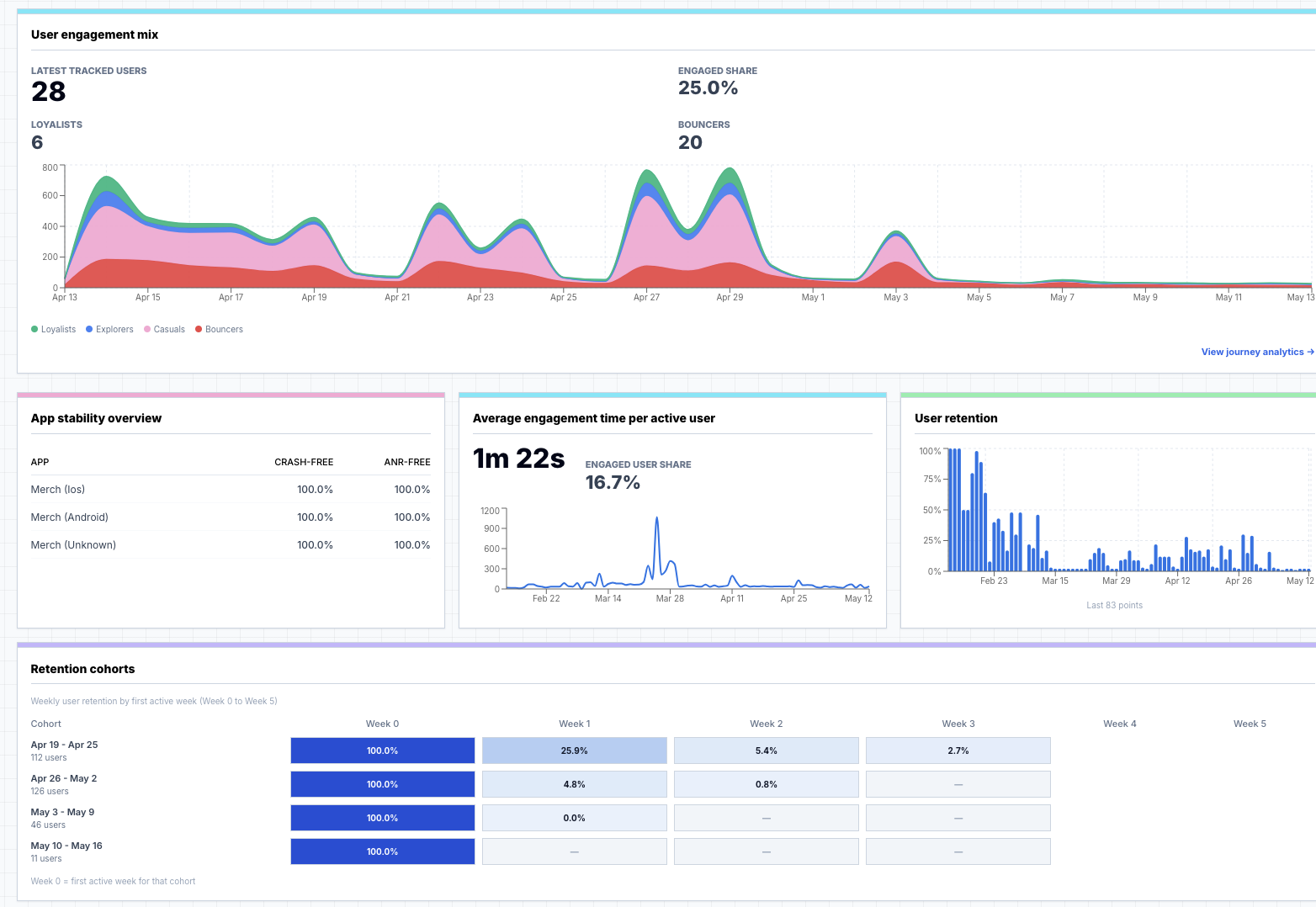
Product-side and financial leakage are different
Financial revenue leakage includes problems such as incorrect pricing, discounts, usage rating, invoices, tax, contract terms, credits, collections, and accounting state. Detecting it requires controlled comparison across CRM, contracts, billing, payment, and ledger systems.
Product-side leakage occurs when user intent fails before or around the commercial state: onboarding prevents first value; a trial never activates; upgrade intent stalls; checkout or payment interaction breaks; entitlement does not match a paid subscription; and repeated product friction contributes to cancellation.
The two sides can meet. A billing-state error can create a broken product experience, and a product defect can prevent an otherwise valid charge or renewal.
Map leakage across the customer lifecycle
Use states rather than departmental ownership.
| Lifecycle state | Revenue expectation | Example leak |
|---|---|---|
| Qualified signup | User can reach first value | Required integration silently fails |
| Activated trial | User can evaluate the product | Core result is empty or delayed |
| Upgrade intent | User can choose and buy the right plan | Limits or plan differences are unclear |
| Checkout | Valid intent can reach paid state | Request times out or authentication loses state |
| Paid subscription | Access matches the purchase | Entitlement remains inactive |
| Renewal | Healthy account can continue | Method update or retry does not reconcile |
| Retention | Product continues delivering value | Repeated friction precedes cancellation |
| Financial recognition | Systems agree on amount and status | Invoice, contract, and collection disagree |
This map prevents “revenue leakage” from becoming one dashboard with no owner.
Start with contradictions
The highest-confidence leaks appear where two systems or states disagree. A user completes an action but no success state exists. The processor authorizes payment without an order, or an invoice is paid while the subscription remains inactive. An upgrade can complete while the product still enforces old limits. Trial, renewal, and cancellation paths produce similar contradictions when product access does not match the commercial record.
Contradictions deserve immediate reconciliation because they can harm both revenue and customer trust.
Look for excess failure, not all drop-off
Not every non-conversion is leakage. Some users are unqualified, choose another product, reject the price, or leave for reasons the product cannot observe.
Estimate product-side leakage from excess failure above a defensible healthy baseline:
excess failed intent = eligible attempts × (current failure rate - healthy failure rate)Then apply historical completion value only when the population and state justify it. Label the result as potential impact. Do not call it recovered or booked revenue.
This restraint makes leak estimates more credible and easier to compare.
Revenue leakage examples in SaaS
Onboarding verification fails after valid setup
The user enters the right credential, the backend succeeds, but the UI times out and returns them to setup. Event analytics records no activation. Replay and server state show false failure.
Trial users reach limits before understanding value
The limit is technically correct, but the product does not show what was achieved or why upgrading helps. Users visit pricing and leave without checkout intent. The issue may be packaging or value communication rather than payment.
Payment succeeds but entitlement does not
The billing system is healthy. The user is charged and remains locked out because a webhook or application update failed. This is a high-confidence post-payment leak and a support risk.
Renewal failure reaches the wrong person
The account is active, but only a non-admin user sees the recovery message. The payment issue ages while the administrator remains unaware.
A release creates device-specific checkout loss
Overall checkout changes slightly, but one mobile version begins freezing during authentication. Device, release, ANR, and replay evidence isolate the leak.
Build a monthly leak ledger
A leak ledger should record evidence and state, not only a dollar estimate.
| Field | Example purpose |
|---|---|
| Leak class | Onboarding, checkout, subscription, billing, retention |
| Failed state | Exact transition or contradiction |
| First and last seen | Duration and recency |
| Affected population | Eligible sessions, users, accounts, or invoices |
| Evidence confidence | Repeated behavior and system agreement |
| Potential impact | Assumptions and range |
| Owner | Team able to change the failed state |
| Verification metric | Healthy outcome after the fix |
| Status | Investigating, confirmed, fixed, verified |
Keep recovered revenue separate from potential impact. Recovery requires the healthy commercial outcome to occur.
Use sessions to explain product-side leakage
Aggregate data can locate the state. Sessions show the experience that produced it.
For a suspected leak, compare successful and failed attempts from the same cohort. Look for repeated taps, missing feedback, validation loops, backtracking, slow or failed requests, crashes, ANRs, and changes after a release.
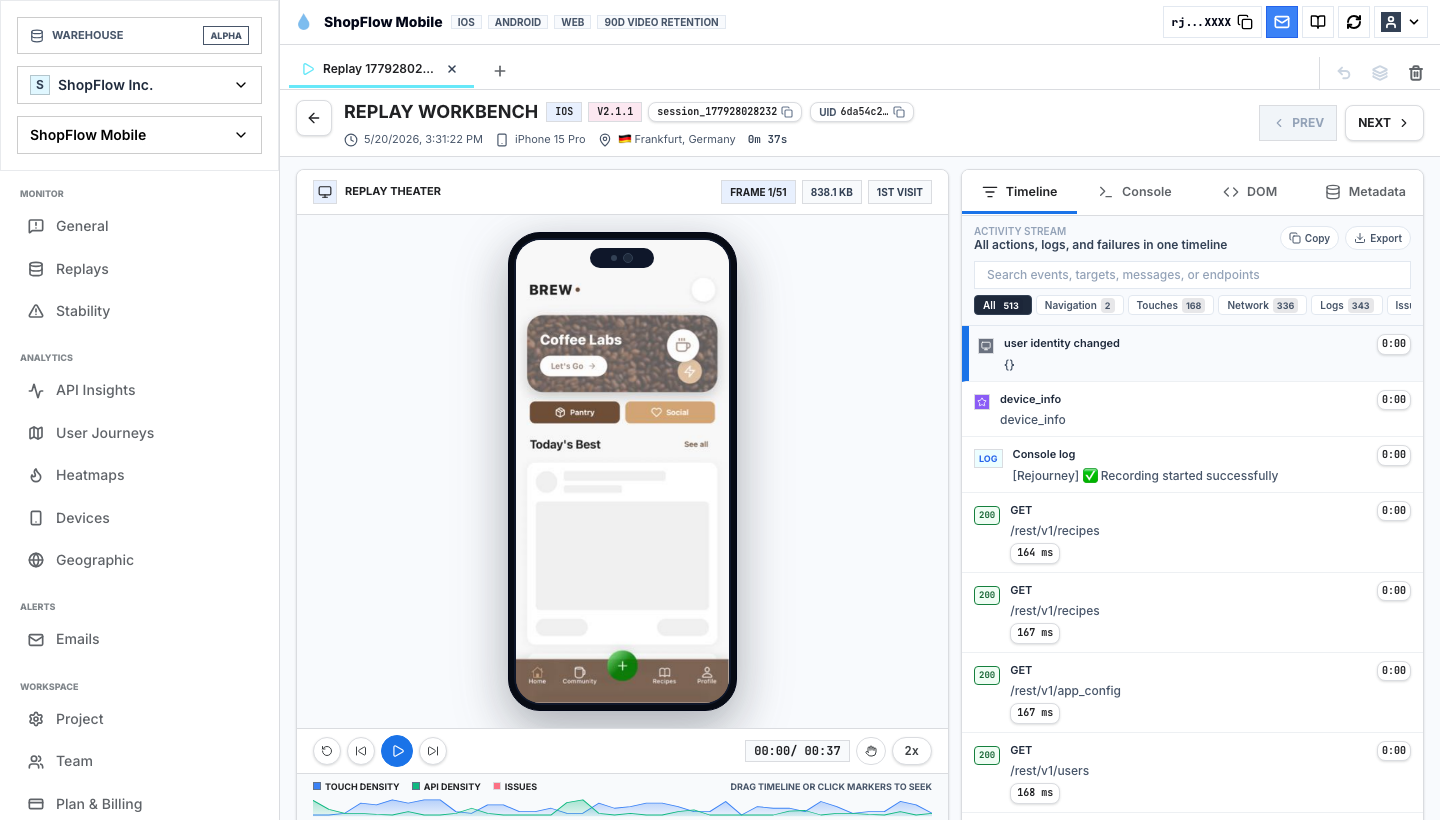
Mask sensitive fields and keep financial systems authoritative. Replay is diagnostic context, not a billing ledger.
Prioritize by confidence, recoverability, and harm
A small post-payment entitlement failure may outrank a larger ambiguous landing-page drop because the evidence and customer harm are clearer.
Rank leaks using: confidence that the process failed; number and value of eligible outcomes affected; recoverability of the state; customer harm and trust risk; recency and trend; and effort and time to verification.
This keeps the backlog focused on work that can actually restore a healthy outcome.
Prevent recurrence at the state boundary
Fixing the visible error is not always enough. Add detection and reconciliation where the states diverged.
Examples: server-confirmed activation rather than click-based activation; idempotent checkout attempts; payment-to-order reconciliation; subscription-to-entitlement reconciliation; release and device monitoring on commercial paths; alerts tied to eligible failure rate rather than raw errors; and post-fix cohort verification.
Revenue loss prevention is strongest when the system notices contradiction before a customer or finance report does.
See the SaaS leak in context
Rejourney brings onboarding, feature use, checkout, subscription state, and the related sessions into the same investigation. A leak entry can point to the transition, cohort, release, and recordings that support it, while server-side business state determines whether the outcome truly failed.
Use revenue leak detection to build the alert and SaaS onboarding practices to work on the earliest part of the customer path.