
Checkout optimization attracts universal advice: remove fields, add trust marks, show progress, allow guest checkout. Any of those changes can help. None should outrank evidence from the actual checkout.
The fastest defensible path is to find a repeated failure of buyer intent, prove how it changes the session, make the smallest change that addresses it, and verify both conversion and downstream trust.
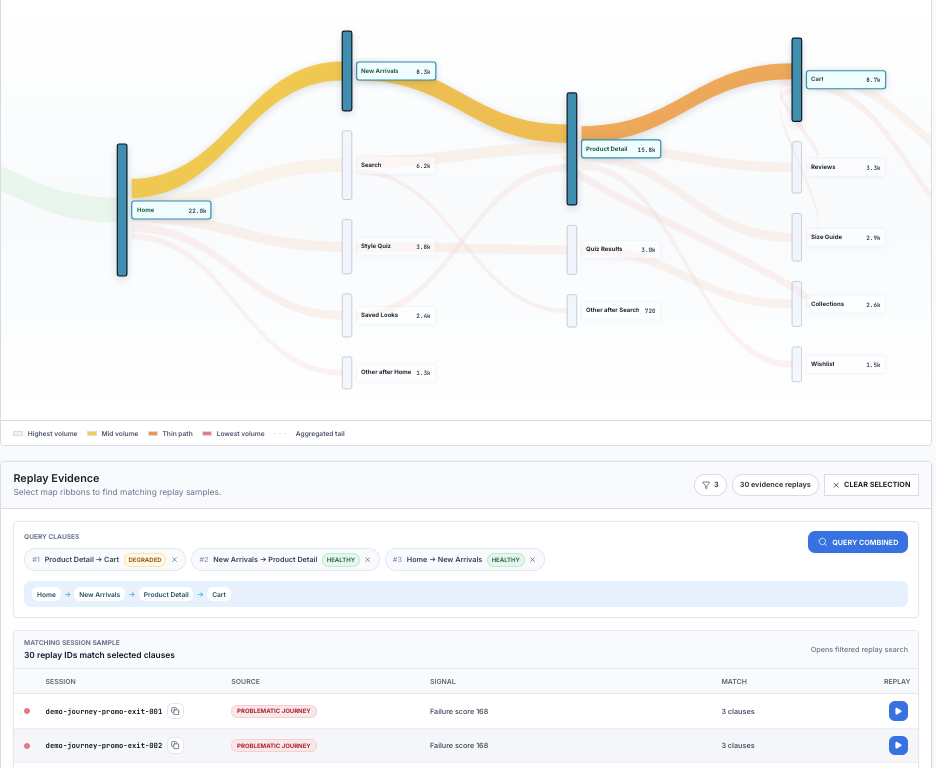
Establish a trustworthy baseline
Before changing the interface, confirm the funnel reflects business truth. Deduplicate repeated attempts, separate new checkout from retries, and reconcile payment, order, subscription, and entitlement states.
Report conversion by a stable cohort and include: checkout start rate; step-to-step conversion; payment submission and authorization; order or subscription creation; visible confirmation; time through checkout; and retry and duplicate-attempt rate.
Mark releases, campaigns, pricing changes, payment-provider incidents, and traffic-mix changes. A conversion decline during a new campaign may reflect a different audience rather than a broken form.
Rank transitions by excess loss
The largest percentage drop is not always the best opportunity. Calculate how many additional users failed compared with a reasonable baseline for that transition and cohort.
excess loss = current entrants × (baseline failure rate - current failure rate)Use a recent healthy period, comparable platform, or unaffected release. Note seasonality and volume. The purpose is prioritization, not false financial precision.
Then attach evidence confidence. A transition with repeated request failures and matching replay is stronger than one where users simply leave after reading a price.
Compare the same intent across successful and failed sessions
For the chosen transition, sample successful and failed sessions from the same platform, plan, region, and release where possible.
Ask what the successful session received that the failed session did not. Did totals, delivery, or terms change? Did the action acknowledge the tap and preserve the user’s work after validation? Compare request latency and results as well. On mobile, check whether focus, the keyboard, or system authentication interrupted the state, then look for a safe recovery path.
The comparison keeps normal hesitation from being mislabeled as friction.
Fix feedback before redesigning intent
Many checkout leaks come from uncertainty rather than layout. Users need to know that the action was accepted, what state the purchase is in, and whether retrying is safe.
Start by acknowledging the submission immediately and preventing a second unsafe attempt while it is processing. Put specific validation beside the responsible field and preserve safe input after a failure. Totals should explain why they changed, while confirmation should distinguish a pending payment from a completed one. If payment already succeeded, provide a route back to the receipt or purchased access.
These changes can improve trust without removing information the user needs.
Treat latency as interface behavior
Users experience latency through the UI. A two-second response with a clear progress state can feel safer than a one-second response that appears to ignore the action.
Measure latency by checkout transition and compare it with abandonment, retries, and rage interactions. Inspect p50 and tail latency; a small population of very slow requests may create the most damaging sessions.
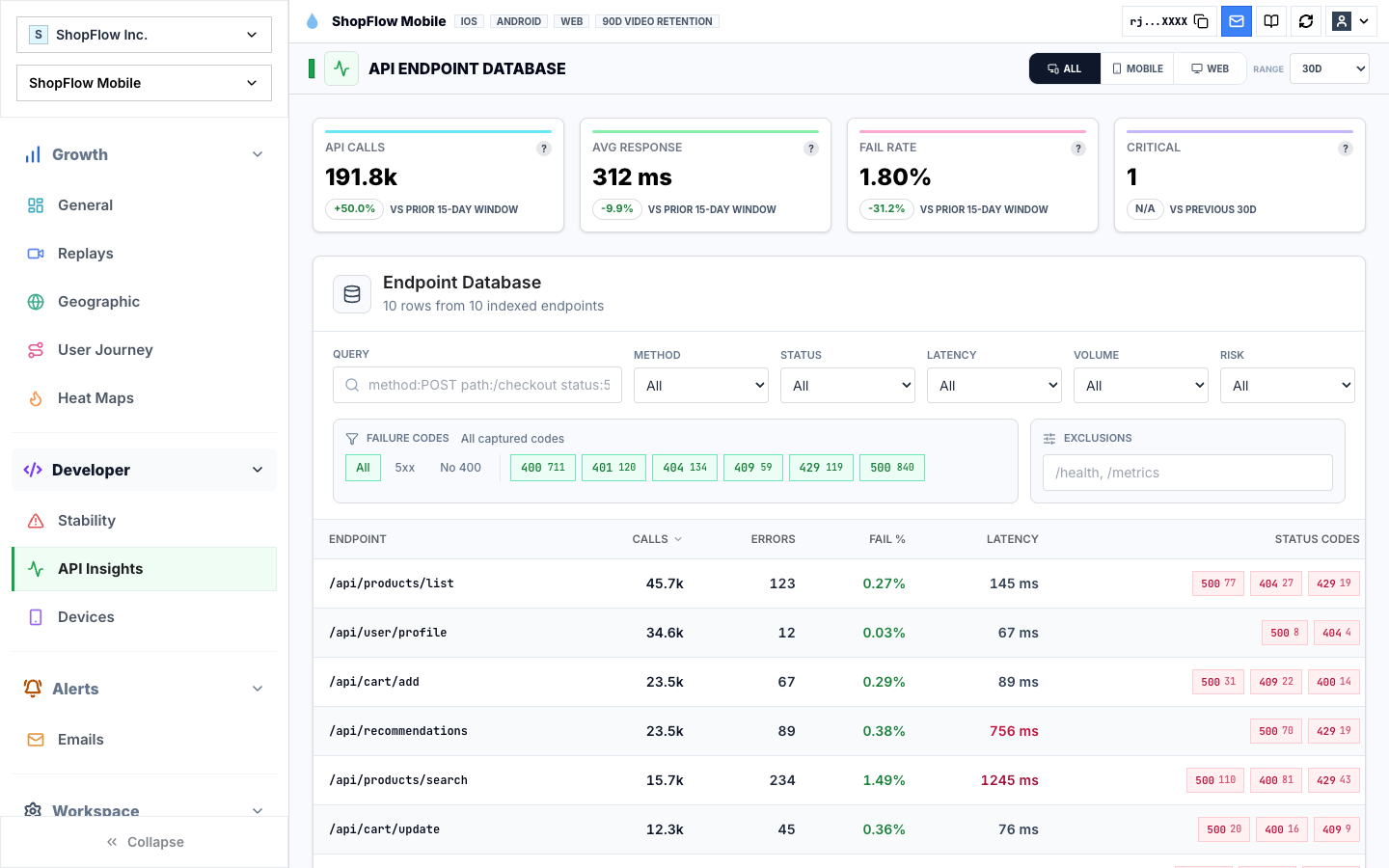
If the backend cannot be made instant, design the intermediate state and reconciliation path deliberately.
Optimize fields by decision value
Do not remove a field only because fewer fields sounds better. Determine why the business needs it, when the value becomes known, and whether the product can infer or defer it.
For each field: Is it required to complete this transaction? Can it be collected after authorization? Can a known customer reuse a verified value? Does validation happen before or after submission? Does the field appear conditionally for the relevant user? What happens to the rest of the form if it fails?
The objective is less unnecessary effort, not the smallest possible form.
Make totals stable and explain changes
Unexpected cost changes create legitimate exits. Show the currency, billing period, tax, shipping, discount, renewal terms, and immediate charge at the point they become relevant.
If a total changes after address, plan, or quantity input, keep the change visible and explain it. Replay can show that users returned to an earlier step, but it cannot tell you the price was unacceptable unless the user says so. Treat the behavior as evidence of reconsideration, not mind reading.
Test one hypothesis at a time
Turn the diagnosis into a statement:
Buyers on mobile version 5.3 repeatedly submit payment because the authentication return restores the form without a visible result. Preserving the pending state and reconciling the completed attempt should reduce retries and increase confirmation presentation.
That hypothesis names the population, behavior, mechanism, change, and verification metric.
Avoid testing a bundle of new layout, copy, fields, and payment methods when the team will not know which change mattered. Emergency fixes can be bundled when customer harm demands it; document that the result will be harder to attribute.
Keep revenue and trust guardrails
Checkout conversion is not the only outcome. Monitor: authorized value and completed orders or subscriptions; duplicate attempts and duplicate charges; refunds and chargebacks; cancellation or early renewal failure; support contacts about payment or access; confirmation delivery and entitlement; and performance and error rates.
A change that raises button completion while creating mistaken purchases is not an improvement.
Verify the affected cohort after release
Keep the original filter and session query attached to the work. After release, compare the same platform, route, plan, and transition.
Look for: lower excess failure; fewer retries and rage interactions; improved confirmation presentation; better tail latency or recovery; no new failure branch; and healthy downstream commercial outcomes.
Open post-release sessions as well. A chart can recover while a new workaround makes the experience worse for a smaller cohort.
A focused optimization backlog
Each checkout item should contain:
| Field | Purpose |
|---|---|
| Transition | The business state where progress failed |
| Affected cohort | Who and which release or platform |
| Excess loss | Impact above baseline |
| Evidence | Replay, request, error, and payment facts |
| Confidence | How repeatable and specific the diagnosis is |
| Proposed change | Smallest credible fix |
| Verification | Primary metric and guardrails |
This makes the backlog compete on evidence rather than opinion.
Replay the checkout that did not convert
Rejourney keeps a checkout step beside the sessions that entered it. Open the users who attempted payment without reaching a confirmed order, then compare them with successful checkouts from the same device class and release. The replay shows the interaction while request timing and captured errors explain what the interface could not.
That narrows the work from “improve checkout” to a specific transition with a reproducible failure. Continue with checkout funnel analytics or review the broader revenue leak detection method.